In today’s fast-paced world, we all wear multiple hats—employee, student, parent, entrepreneur, caregiver. These roles demand our time, energy, and attention. According to the American Institute of Stress, 83% of US workers suffer from work-related stress, and 60% feel stressed three or more workdays per week (source).
Balancing responsibilities while managing our mental and physical well-being is a growing challenge. Enter comprehensive 2025 guide for daily planners – AI Powered,: showcasing simple yet powerful tools that bring structure to chaos.
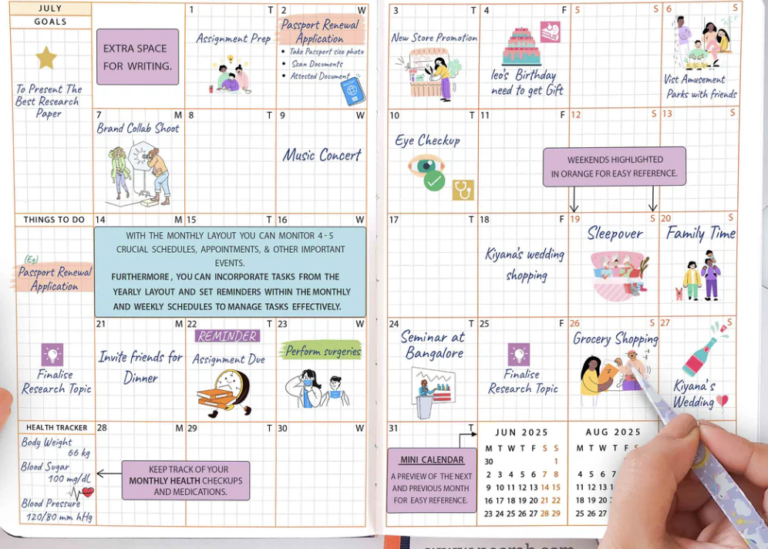
Whether digital or paper-based, daily planners help us manage our time effectively, reduce stress, and build better habits.
In this post, we’ll dive into how a daily planner in 2026 can transform your life, with tailored schedules for different roles and a comparison of digital vs. paper planning
What Makes AI Daily Planners Different?
Traditional planning tools, whether paper journals or basic digital calendars, place the burden of organization entirely on you. You must remember to add events, set reminders, categorize tasks, and constantly reorganize as priorities shift. This cognitive load itself becomes exhausting.
Understanding Natural Language
Simply tell your AI planner what needs to happen: “Gym every morning at 8 am” or “Submit project proposal by Friday 5 pm.” The AI interprets your intent, creates appropriate calendar entries, and sets intelligent reminders without you navigating complex menus.
Proactive Schedule Optimization
AI planners analyze your calendar patterns, energy levels throughout the day, and competing priorities to suggest optimal scheduling. Need to fit in a workout? The AI identifies windows when you’re historically most likely to follow through. Have a complex project with multiple deadlines? The AI breaks it into manageable chunks and distributes them across your available time.
For those managing ADHD or executive function challenges, this proactive approach is transformative. Learn more about how to plan effectively with ADHD using AI-powered tools that adapt to neurodivergent needs.
Multi-Calendar Integration
Most people juggle multiple calendars, work Outlook, personal Google Calendar, family shared calendar, and more. Switching between these creates blind spots and scheduling conflicts.
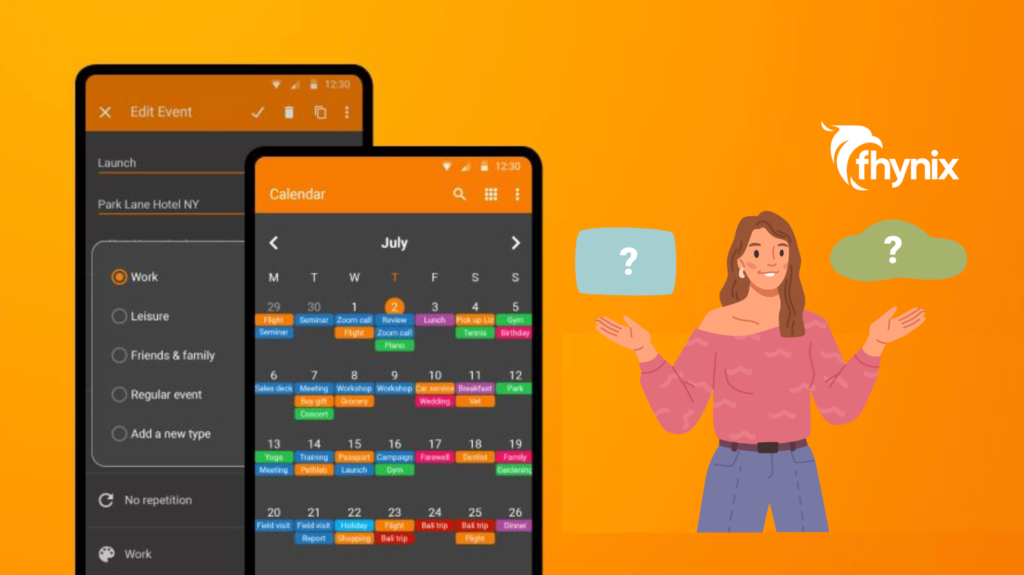
Fhynix solves this by consolidating all your calendars into one unified view, automatically flagging conflicts and ensuring you never double-book yourself. Discover how to merge multiple calendars on iPhone and other devices for seamless synchronization.
Intelligent Reminder Systems
Generic calendar notifications often get ignored or arrive at inconvenient times. AI planners send context-aware reminders through your preferred channels—whether that’s WhatsApp, SMS, email, or push notifications.
Habit Formation Support
Building consistent routines requires repetition and accountability. AI planners track your habit completion rates, identify patterns in when you’re most successful, and adapt reminders to increase your follow-through.
Whether you’re tracking fitness goals, meditation practice, or work focus sessions, understanding how to make a habit tracker that leverages AI insights can accelerate behavior change. Additionally, explore the 10 free ipad planner apps to see practical automation in action.
Why Use a AI Daily Planner 2026: Why do you need one?
Better Time Management: Allocate your hours wisely.
Reduced Stress: Avoid last-minute rushes.
Improved Productivity: Focus on what matters and plan rest.
Mental Clarity: Keep track of tasks and goals.
Work-Life Harmony: Ensure time for both career and self-care.
Whether you’re an ambitious college student or a busy parent, a daily planner brings intention and focus to your day.
6:00 AM – Wake up, 10-min meditation, light exercise
6:45 AM – Shower and breakfast 7:30 AM – Commute with a podcast 9:00 AM – Team meeting 10:00 AM – Deep work session 12:00 PM – Lunch break and short walk 1:00 PM – Respond to emails 3:00 PM – Project work or client calls 5:00 PM – Wrap up and log out 6:00 PM – Dinner with family 7:30 PM – Workout or unwind time 9:00 PM – Read/journal 10:00 PM – Sleep
2. Entrepreneur
6:00 AM – Wake up, gratitude journaling 6:30 AM – Gym 8:00 AM – Plan priorities for the day 9:00 AM – Product development/strategy call 11:00 AM – Content creation or business outreach 1:00 PM – Networking lunch 2:00 PM – Respond to emails/admin tasks 4:00 PM – Team sync-up or feedback sessions 6:00 PM – Walk or unwind 7:00 PM – Reading or learning 8:00 PM – Family time 10:00 PM – Sleep
3. Parent
5:30 AM – Wake up, prep breakfast/lunch for kids 6:30 AM – Kids wake up, morning routine 8:00 AM – School drop-off 9:00 AM – Work calls or housework 12:00 PM – Lunch 1:00 PM – Errands or remote work 3:00 PM – School pick-up and homework help 5:00 PM – Playtime or family walk 6:00 PM – Dinner prep 7:00 PM – Family dinner and clean-up 8:00 PM – Kids bedtime routine 9:00 PM – Me-time: read or TV 10:00 PM – Sleep
4. College Student
7:00 AM – Wake up and stretch 7:30 AM – Breakfast and review notes 8:30 AM – Classes 12:30 PM – Lunch with friends 1:30 PM – Study or lab work 4:00 PM – Gym or club activities 6:00 PM – Dinner 7:00 PM – Group project or tutoring 9:00 PM – Leisure time or Netflix 10:00 PM – Sleep
5. Caregiver
5:00 AM – Wake up and prep for day 6:00 AM – Morning care routines for dependent 8:00 AM – Housekeeping and breakfast 10:00 AM – Doctor appointment/therapy 12:00 PM – Lunch and rest 2:00 PM – Admin work or errands 4:00 PM – Outdoor time/walk 6:00 PM – Dinner prep 8:00 PM – Quiet time 10:00 PM – Sleep
6. Homemaker
6:30 AM – Wake up and meditate 7:00 AM – Breakfast prep for family 9:00 AM – House cleaning or grocery shopping 11:00 AM – Hobbies or online learning 1:00 PM – Lunch and break 3:00 PM – Organizing or home projects and pick kids 5:00 PM – Prepping dinner 7:00 PM – Family dinner 8:00 PM – Relaxing activity or reading 10:00 PM – Sleep
Digital Daily Planner 2026: Why It Beats Paper
As we move deeper into a tech-first world, digital planners are emerging as the superior solution for daily planning. Here’s why:
1. Cross-Device Syncing
Access your schedule from your phone, tablet, laptop, or smartwatch. Get notified across platforms.
2. Smart Reminders & AI Suggestions
Apps like Fhynix use AI to suggest tasks based on priorities, like “drink 2L water” or “buy birthday gift before mom’s birthday.”
3. Easy Sharing
Coordinate family schedules, team meetings, or study groups effortlessly with calendar sharing features.
4. Custom Views
Choose between day, week, month views. Zoom into a task or zoom out to plan your semester.
5. Eco-Friendly
Save trees by avoiding paper notebooks.
“You can’t manage what you don’t measure” — Peter Drucker. Digital planners help measure your time so you can manage your life.
The Benefits of AI-Powered Planning
Reduced Cognitive Load: When your AI assistant handles scheduling logistics, your brain has more capacity for creative thinking, problem-solving, and meaningful work.
Improved Follow-Through: Studies show that scheduled commitments have a 91% completion rate versus just 50% for unscheduled intentions. AI planners ensure everything important gets scheduled.
Better Work-Life Integration: By treating personal commitments with the same priority as work meetings, AI planners help you protect time for relationships, health, and hobbies.
Data-Driven Insights: Over time, AI planners identify patterns in your productivity, helping you understand when you work best and how to structure your ideal day.
Stress Reduction: Knowing that nothing will slip through the cracks and having a realistic plan for accomplishing what matters significantly reduces anxiety.
The statistics are clear: stress, overwhelm, and burnout are epidemic. Traditional planning methods, while better than chaos, still place a significant cognitive burden on already overtaxed minds. AI daily planners represent a fundamental shift in how we can manage time: from manual organization to intelligent assistance.
Fhynix stands amongst the top planners supported by AI integrations, designed especially for individuals and families with features such as WhatsApp reminders, image upload for schedule extraction, WhatsApp reminders, unlimited free events, image upload for schedule extraction, and voice input.
The key to achieving work-life balance isn’t doing more; it’s doing what matters. Whether you’re juggling work, school, family, or all of the above, a well-planned day can transform your year. Choose a daily planner that aligns with your lifestyle. Better yet, go digital with tools like Fhynix that help you automate reminders, create smart schedules, and stay on top of what matters.