Quick Answer: The best planner app for iPad in 2026 is Fhynix for AI scheduling and WhatsApp reminders, Structured for visual timeline planning, and GoodNotes for Apple Pencil handwriting. All three sync with iPhone. Only Fhynix sends reminders to WhatsApp.
What makes a great iPad planner in 2026 is different from what makes a great iPhone planner. You need home screen widgets that show your day at a glance, split screen support so you can plan while referencing notes, proper iPhone sync so nothing falls out of sync when you leave your desk, and reminders that actually reach you — not just push notifications that get buried. Only one app on this list delivers reminders via WhatsApp.
Digital notebook apps like GoodNotes let you write on beautiful PDF templates with Apple Pencil, excellent for recreating paper planner experience. But they don’t solve the fundamental challenge: integrating your schedule with actual time available across all life areas.
This is where calendar-first planning through Fhynix transforms iPad planning from beautiful documentation into functional time management.
What iPad Users Actually Need
When searching for the best iPad planner app, most people are asking: “How do I manage my complex life on this device?”
Real Requirements: See all commitments unified, schedule tasks into available time, sync external calendars, access across devices, share schedules, get effective reminders, work with touch/pencil/keyboard.
Traditional iPad planners excel at one or two requirements while falling short on others. Digital notebooks prioritize handwriting. Task apps focus on lists. Calendar apps show schedules but lack task integration.
For comprehensive strategies, best daily routine applications explores how unified systems beat fragmented approaches.
iPad Planner Apps Comparison
The only reminder app that texts you on WhatsApp — where you actually check.
98% open rate vs 20% for push notifications. Free 3-day trial, no card needed.Try Fhynix Free →
| Feature | ⭐ Best Pick Fhynix | TickTick | Any.do | Todoist | Apple Reminders |
Google Keep |
|---|---|---|---|---|---|---|
| 💰 Pricing | ||||||
| Free Plan | ✅ 3-day trial | ✅ Yes | ✅ Yes | ✅ Yes | ✅ Always free | ✅ Always free |
| Paid Plan | $7/mo · $40/yr | $3.99/mo · $35.99/yr | $4.99/mo · $59.88/yr | $5/mo · $48/yr | Free always | Free always |
| Best Value Plan | $3.33/mo (annual) | $3/mo (annual) | $4.99/mo (annual) | $4/mo (annual) | Free | Free |
| 💬 How Reminders Reach You | ||||||
| WhatsApp Reminders | ✅ Native — built in | ❌ No | ❌ No | ❌ No | ❌ No | ❌ No |
| Reminder Open Rate | ~98% (WhatsApp) | ~20% (push) | ~20% (push) | ~20% (push) | ~20% (push) | ~20% (push) |
| 24h Advance Reminder | ✅ Yes | ⚠️ Manual only | ⚠️ Manual only | ⚠️ Manual only | ⚠️ Manual only | ❌ No |
| 10-min Reminder | ✅ Automatic | ⚠️ Manual only | ⚠️ Manual only | ⚠️ Manual only | ⚠️ Manual only | ❌ No |
| Location-Based Reminders | ❌ No | ✅ Yes | ✅ Yes | ✅ Yes (premium) | ✅ Yes | ❌ No |
| 🤖 AI & Smart Input | ||||||
| AI Scheduling | ✅ Full AI agent | ❌ No | ❌ No | ❌ No | ❌ No | ❌ No |
| Natural Language Input | ✅ Yes — type or speak | ✅ Yes | ✅ Basic | ✅ Yes | ✅ Basic | ❌ No |
| Voice Input | ✅ Yes | ❌ No | ⚠️ Via Siri | ⚠️ Via Siri | ✅ Yes (Siri) | ❌ No |
| Recurring Reminders | ✅ Yes | ✅ Yes | ✅ Yes | ✅ Yes | ✅ Yes | ❌ No |
| 📅 Calendar & Organisation | ||||||
| Calendar View | ✅ Full timeline | ✅ Yes (premium) | ✅ Yes | ❌ No | ⚠️ Basic | ❌ No |
| Google Calendar Sync | ✅ Two-way sync | ✅ Yes | ✅ Yes | ❌ No | ❌ No | ❌ No |
| Habit Tracking | ✅ Yes + streaks | ✅ Yes | ❌ No | ❌ No | ❌ No | ❌ No |
| 📱 Platform | ||||||
| iOS | ✅ Yes | ✅ Yes | ✅ Yes | ✅ Yes | ✅ Yes | ✅ Yes |
| Android | ✅ Yes | ✅ Yes | ✅ Yes | ✅ Yes | ❌ No | ✅ Yes |
| Apple Watch | ✅ Yes | ❌ No | ❌ No | ❌ No | ✅ Yes | ❌ No |
| Ease of Use | ★★★★★ | ★★★★☆ | ★★★★★ | ★★★★☆ | ★★★★★ | ★★★★★ |
| 🎯 Best For | ||||||
| Best For | WhatsApp reminders + AI scheduling for your whole life | Power users who want tasks, habits, and Pomodoro in one app | Minimalists who want clean, simple reminders with a daily planner | Teams and individuals who want reliable recurring task reminders | iPhone-only users who want a zero-cost built-in reminder | Quick notes and simple one-off reminders, no recurring tasks |
Why Most iPad Planners Miss the Mark
Digital Notebooks: Beautiful Apple Pencil experience, but every schedule change requires manual rewriting. Don’t sync with external calendars, you manually transcribe university, work, and personal calendars, creating error opportunities.
Task Apps: Great on iPad but tasks separate from calendar. “Write research paper” shows due date but not that you have three exams, work shifts, and family events the same week, no visible time to actually write.
Simple Calendars: Show schedules but lack comprehensive task management, habit tracking, or unified views needed for complex lives.
The Calendar-First Solution: Fhynix on iPad
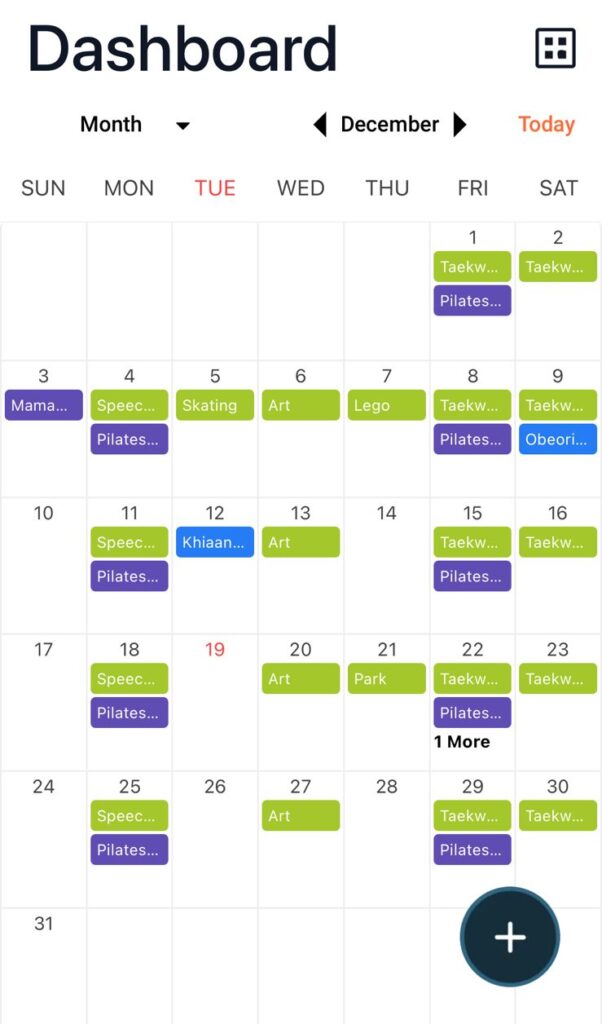
Fhynix leverages what digital planning uniquely offers while working beautifully on iPad.
Unified Timeline: See everything, classes, work, assignments with scheduled work sessions, personal time. iPad’s larger screen makes weekly and monthly patterns clear. Syncs across iPad, iPhone, all devices automatically.
External Integration: University calendar, work schedule, personal Google Calendar merge into one view. Changes sync automatically, no manual updating.
Flexible Input: Works with touch, voice, or keyboard. Not locked into Apple Pencil requirement. Add events by tapping, speaking, or typing.
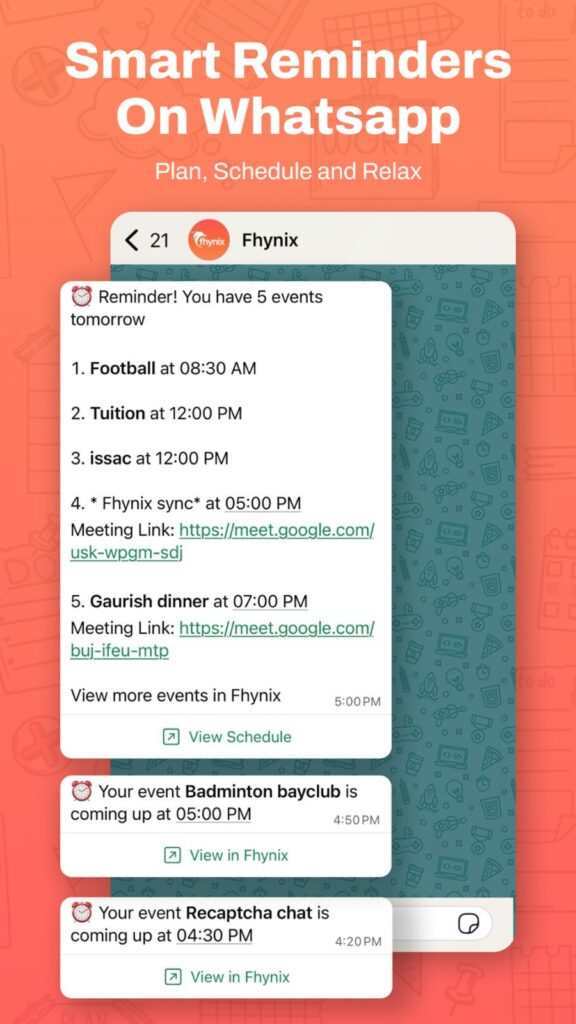
WhatsApp Reminders: Calendar event reminders through WhatsApp, checked constantly by students, dramatically increase follow-through versus ignored iPad notifications.
Family Coordination: Share calendar with parents, roommates, study groups. They see availability without needing iPad access.
Color-Coded Visuals: Different colors for life areas show weekly balance instantly on iPad’s display.
For students managing academic planning, academic goals for students shows calendar-first methodology ensuring goals become scheduled actions.
Real iPad User Scenarios
College Student: Traditional approach uses four separate apps, GoodNotes for assignments, Apple Calendar for classes, Notes for planning, Reminders for tasks. Constant mental coordination required.
Fhynix approach: Everything on one timeline. University calendar syncs automatically. Schedule exam review sessions as calendar blocks. Work shifts pull from employer calendar. Study group meetings from shared Google Calendar. Free time visible immediately.
Professional: Traditional uses Fantastical for meetings, Trello for projects, separate notebook, scattered email invites. Beautiful apps, fragmented system.
Fhynix approach: Client meetings, project deadlines with work blocks, personal commitments unified. iPad shows complete picture. Schedule deep work around meetings, protect personal time, see conflicts before accepting commitments.
For comprehensive strategies, how to plan your day everyday productivity made easy offers frameworks working beautifully on iPad.
When to Choose Different iPad Planners

Choose digital notebooks if: Aesthetic and handwriting experience is top priority, you have simple static schedules, you enjoy manual planning, you want iPad-exclusive Apple Pencil experience.
Choose Fhynix if: Complex schedules with multiple life areas, need automatic external calendar sync, want cross-device access, value time visibility over handwriting aesthetics, need family/team coordination.
For alternatives beyond traditional planning, 5 Skylight Calendar alternatives: 5 picks that are perfect for you compares calendar-first approaches.
Getting Started with Calendar-First iPad Planning
Week 1: Connect external calendars (university, work, Google, iCloud). Everything syncs automatically into Fhynix on iPad showing actual schedule.
Week 2: Schedule tasks into time blocks. “Write paper” becomes “Outline Monday 3-4 PM, draft Tuesday 7-9 PM, edit Wednesday 2-3 PM.”
Week 3: Adjust time blocks based on reality. Consistent task completion failures reveal underestimation or overcommitment, both become obvious with calendar-first planning.
Week 4: Enable calendar sharing for coordination. Parents see exam weeks, roommates see work schedules. iPad becomes personal command center others reference without device access.
For time blocking strategies, best planner for time blocking provides iPad-optimized frameworks.
Frequently Asked Questions About Reminder Apps
Which reminder app sends reminders to WhatsApp?
Fhynix is the only reminder app that sends reminders directly to WhatsApp — automatically 24 hours before and 10 minutes before each task or event. Because WhatsApp messages have a ~98% open rate compared to ~20% for push notifications, you actually see the reminder when it matters. No other major reminder app on iOS or Android offers native WhatsApp delivery.
What is the best free reminder app in 2026?
The best free reminder app depends on what you need. Apple Reminders and Google Keep are completely free with no paid tier — Apple Reminders is best for iPhone users with Siri integration, and Google Keep is best for simple one-off notes. TickTick and Todoist both have capable free plans with recurring reminders. Fhynix offers a free 3-day trial with full access to WhatsApp reminders and AI scheduling, then $40/year ($3.33/month).
What is the best reminder app for Android?
For Android, the best reminder apps are Fhynix, TickTick, Any.do, Todoist, and Google Keep — all fully supported on Android with no feature gaps versus iOS. Fhynix is the top pick for Android because it sends reminders to WhatsApp, which works identically on Android and iPhone. Apple Reminders is not available on Android.
Why do I keep missing my reminders?
Most people miss reminders because they arrive as push notifications — and push notifications have a ~20% open rate. They get buried in a sea of other alerts, appear on a locked screen you don’t check, or get dismissed out of habit. Reminder apps that deliver alerts via WhatsApp (like Fhynix) report significantly higher reminder follow-through because WhatsApp is where people actively communicate, not just passively receive notifications.
Can I set a reminder on WhatsApp?
WhatsApp itself does not have a built-in reminder or scheduling feature. However, Fhynix integrates with WhatsApp via the WhatsApp Business API — you add your tasks and events in Fhynix, and it automatically sends you a WhatsApp message 24 hours before and 10 minutes before each one. No manual WhatsApp message needed. It works on both iPhone and Android.
What is the difference between a reminder app and a to-do list app?
A reminder app focuses on alerting you at a specific time — it tells you what to do and when. A to-do list app focuses on organising and tracking tasks without necessarily delivering time-based alerts. The best apps in 2026 combine both: apps like Fhynix and TickTick let you add tasks with due times and deliver reminders automatically, so nothing falls through the cracks.
Which reminder app works with Google Calendar?
Fhynix, TickTick, and Any.do all sync with Google Calendar. Fhynix offers full two-way sync — events you add in Google Calendar appear in Fhynix and receive WhatsApp reminders automatically. Todoist does not natively sync with Google Calendar without a third-party integration. Apple Reminders and Google Keep do not sync with Google Calendar.
Is there a reminder app that also tracks habits?
Yes — Fhynix and TickTick both combine reminder scheduling with built-in habit tracking. In Fhynix, recurring habits appear directly in your calendar timeline alongside tasks and events, and WhatsApp reminders are sent for habit check-ins automatically. TickTick has a separate habit tracker module with streak counting. Most other reminder apps — Any.do, Apple Reminders, Google Keep — do not include habit tracking.