The 60-second answer: Whether someone types organizer app or organizer apps, the intent is usually the same: stop dropping balls. Free tools on iPhone can sort information beautifully and still fail at on-time execution. The best “free organizer” stack is often Apple Calendar + Reminders + Focus discipline—then, if reminders get swiped, a higher-response channel (commonly WhatsApp automation) for the small set of commitments that are expensive to miss.
| This guide fits if… | Skip it if… |
| You want free options but your real problem is follow-through | You need paid enterprise workflow or deep project controls |
| You are tired of neat folders and messy real life | You only need a single shopping list |
| You are open to WhatsApp as an execution layer | You want a ranked list of 25 apps with screenshots only |
Singular vs plural intent (same job-to-be-done)
Search language splits (“best organizer app” vs “organizer apps”) but the outcome people want is stable:
- Capture without friction
- Schedule with honest capacity
- Notify at prep time, not only guilt time
- Recover quickly when the week breaks
Editorial consolidation: treat both queries as one canonical page; use natural phrasing so copy matches either search without spawning thin duplicates.
Primary CTA: If iOS alerts are trained away, test execution nudges where you already respond: reminder WhatsApp messages.
Redefine “organized”: taxonomy vs execution
Taxonomy organized: labels, folders, pretty grids.
Execution organized: the right action fires at the right time.
Free organizer apps often win the first and lose the second—because execution is a notification + calendar + habit problem, not a filing problem.
Free iPhone baseline that actually deserves the label
Before downloading anything, the default stack is stronger than it looks:
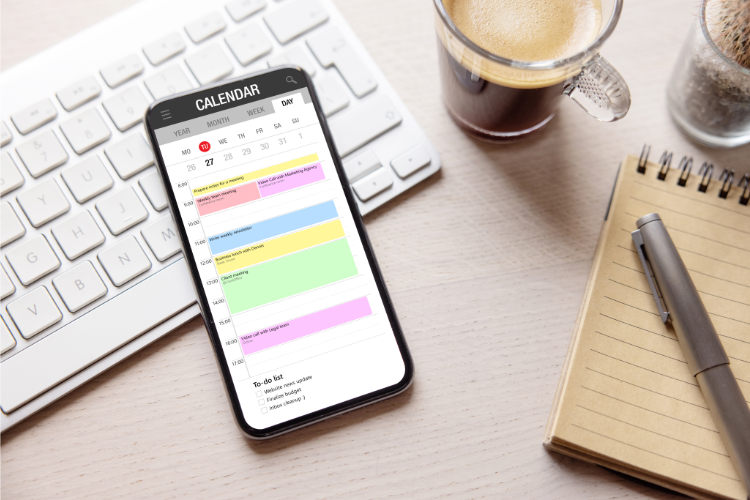
- Calendar: timeline truth for anything with a time consequence.
- Reminders: short operational prompts and recurring maintenance.
- Shortcuts / Focus: reduce noise; automate capture where it helps.
- Mail & Files (disciplined): reference storage, not a second brain you never review.
Free does not mean “empty.” It means fewer vendors, fewer failure points.
When a second free app is rational (and when it is procrastination)
Add a second tool only if you can name the bottleneck in one sentence:
- Shared household logistics → a shared calendar surface (often Google Calendar free tier) with strict alert rules.
- Heavy note + light tasks → pick one notes system; avoid duplicating reminders in two places.
- Students with deadlines → calendar-first; reminders as signals around blocks.
If the bottleneck is “I ignore notifications,” another free organizer app will not fix it.
Primary CTA: Automate Tier A logistics instead of reorganizing labels: automated reminders on WhatsApp.
Decision table: pick your free path without app hoarding
| Your real symptom | Best free-first move |
| Everything is filed, nothing happens on time | Calendar blocks + two-stage reminders; slash notification count |
| Shared plans with partner/family | One shared calendar lane + owner-based alerts |
| Capture fails during commutes | Voice capture → daily 5-minute triage into calendar |
| Swipe habit on all banners | Move must-not-slip items to chat/SMS-class delivery |
WhatsApp angle (free phone, costly misses)
iPhone organizer apps compete for attention in the notification shade. Chat often wins behavioral response—even when the underlying plan still lives on a calendar.
Pattern:
- Keep calendar truth.
- Keep free capture minimal.
- Route execution-critical cues to WhatsApp with clear next actions.
Where Fhynix fits after free tools max out
Fhynix targets users who already proved they can organize information but still miss execution—especially for household logistics, shifts, and partner handoffs. Position it as calendar-first operations + WhatsApp-class reliability, not as “more folders.”