

Checklists remain one of the most effective tools for staying organized because they keep your tasks clear, visible, and easy to act on. Even with modern productivity apps, people come back to checklists for one simple reason—they reduce mental load.
Checklists remain one of the most effective tools for staying organized because they keep your tasks clear, visible, and easy to act on. Even with modern productivity apps, people come back to checklists for one simple reason—they reduce mental load and tap into powerful psychological rewards that keep us motivated.
The Psychology Behind Why Checklists Work
There’s a reason completing tasks feels so satisfying. When we check off items from our to-do lists, our brains release dopamine, a neurotransmitter associated with feelings of happiness, pleasure, and motivation. This neurological reward system creates a positive feedback loop that encourages us to continue working through our tasks.
This process, known as self-directed learning, means that achieving small wins along your projects keeps you motivated to continue working. By breaking down larger projects into bite-sized, tackle-able chunks, you set yourself up for success. Each completed task provides both the satisfaction of progress and the motivation to tackle the next item on your list.
Today’s planners are moving toward cleaner, calendar-integrated designs where tasks show up directly in your day’s timeline. This evolution makes checklists even more useful because you can see not just what needs to be done, but when it fits into your schedule. A simple checklist becomes far more powerful when connected to your real day, transforming abstract to-dos into concrete, time-bound commitments.
What Makes a Good Checklist Planner?
A good checklist planner should make it effortless to capture tasks and even easier to follow through. The best ones allow quick task entry through text, voice, or AI, and keep everything in a clean, easy-to-read layout.
Visibility is key—your tasks should appear where you can’t miss them. Reliable reminders, a clear daily timeline, and a simple interface help ensure you stay on track without feeling overwhelmed. Great checklist planners reduce friction, save time, and ensure your day stays structured and focused.
Also Read: The Best Planner for Time Blocking: Why Your Calendar Should Be Your Command Center
Digital Checklist Planners vs. Paper Planners
Both digital and paper checklists have their place, but the way we plan our days has changed. Paper planners are great for quick jot-downs, but they don’t adapt, adjust, or remind you when something needs attention.
Digital checklist planners offer a clear advantage: they connect your tasks to your actual time. Instead of keeping lists separate, digital tools let you place tasks directly into your day, making it easier to follow through. With features like voice input, smart interpretation, and instant updates, digital planners reduce manual work and help you stay consistent—no rewriting, no forgetting, no clutter.
The Rise of Calendar-Integrated Checklist Planners

Modern planning is moving toward one unified space where tasks and events live together. Calendar-integrated checklist planners solve a major problem—scattered lists. When your to-dos appear directly inside your timeline, it becomes easier to understand your real workload and plan realistically.
This calendar-first approach ensures your day flows smoothly. Instead of switching between notes, lists, and calendars, everything sits in one clean view. Tasks automatically become part of your daily schedule, reducing overwhelm and making planning intuitive. It’s a simpler, smarter way to stay on track every day.
The integration also helps you avoid one of the most common planning pitfalls: overcommitting. When you see your tasks alongside your meetings and appointments, you gain a realistic picture of your capacity. This visibility prevents the frustration of creating impossible-to-complete lists that ultimately undermine your motivation.
How Fhynix Simplifies Checklist Planning
Fhynix takes the simplicity of a checklist and merges it with the clarity of a calendar. Instead of keeping tasks in a separate list, every to-do you add—whether by typing, speaking, or using AI—appears directly in your daily timeline. This makes your checklist part of your actual schedule, not a disconnected list you might forget.
With WhatsApp reminders for events, recurring routines, and a unified daily view, planning becomes effortless. You can capture tasks in seconds, see how they fit into your day, and stay organized without constantly switching screens. Fhynix keeps everything in one place so your focus stays on what matters, while still providing the dopamine-driven satisfaction that makes checklists so effective.
How Fhynix Simplifies Checklist Planning
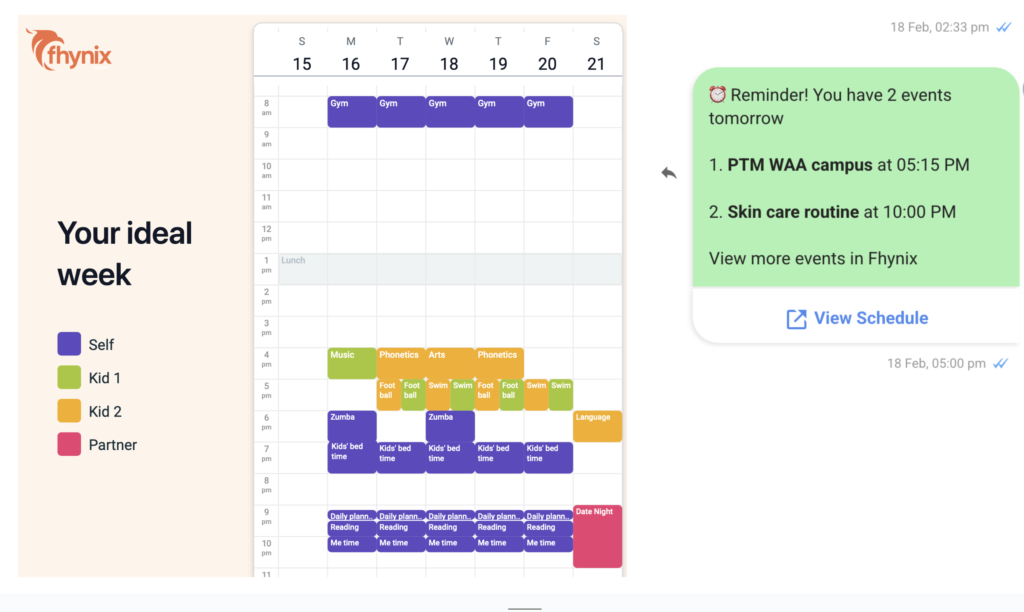
Fhynix takes the simplicity of a checklist and merges it with the clarity of a calendar. Instead of keeping tasks in a separate list, every to-do you add—whether by typing, speaking, or using AI—appears directly in your daily timeline. This makes your checklist part of your actual schedule, not a disconnected list you might forget.
With WhatsApp reminders for events, recurring routines, and a unified daily view, planning becomes effortless. You can capture tasks in seconds, see how they fit into your day, and stay organized without constantly switching screens. Fhynix keeps everything in one place so your focus stays on what matters, while still providing the dopamine-driven satisfaction that makes checklists so effective.
Benefits of Using a Checklist Planner with Calendar Logic
Integrating checklists into a calendar transforms the way you plan. By placing tasks in time slots, you immediately understand your capacity, avoid overload, and stay realistic with your commitments. Your day feels more structured, balanced, and manageable.
You also build routines more naturally because you can see habits and tasks repeat across your schedule. This calendar-first clarity helps reduce decision fatigue, improves follow-through, and keeps life simpler. Instead of juggling multiple tools, you operate from a single, unified timeline that supports both personal and professional priorities.
How to Build a Checklist System That Keeps You On Track
A strong checklist system starts with simplicity. Begin by adding only the tasks that truly matter, and keep them clear and actionable. Break larger responsibilities into smaller steps so they feel manageable and easier to complete.
Place each task directly into your day’s timeline so you know exactly when you’ll handle it. Use reminders thoughtfully—enough to support you, never to overwhelm you. At the end of each day, review your timeline, adjust what’s pending, and prepare for tomorrow. With a consistent rhythm, your checklist becomes a dependable part of your routine.
Common Mistakes People Make with Checklists
Many people overload their checklists with too many items, making them impossible to complete. Another common issue is leaving tasks unassigned to any time block—when something has no place in your day, it’s easy to forget or postpone.
Some users also keep tasks scattered across different notes or apps, which breaks flow and creates confusion. Others skip reviewing their day, causing incomplete tasks to pile up. Avoiding these mistakes keeps your checklist realistic, organized, and easier to follow.
Who Can Benefit Most from Checklist Planners?
Checklist planners support almost anyone who wants more structure without complexity. Students can track classes, assignments, and study blocks in one view, using the motivational power of completed tasks to maintain study momentum throughout the semester.
Working professionals can manage meetings, tasks, and follow-ups without juggling multiple apps. The integration of checklists with calendars helps them see their actual capacity and avoid overcommitment, leading to more realistic planning and better work-life balance.
Parents and families benefit from having routines, reminders, and events aligned in a single timeline. The shared visibility helps everyone stay coordinated while the checklist format makes household responsibilities feel more manageable and less overwhelming.
Creatives and freelancers can break projects into smaller tasks and place them directly into their day. This structured approach helps them maintain momentum on long-term projects while still handling client demands and administrative work. Whether your schedule is predictable or constantly changing, checklist planners help bring clarity and consistency to your routine.
Conclusion: A Checklist Is Only as Good as Where You Place It
A checklist becomes far more powerful when it lives inside your daily schedule. Instead of juggling scattered lists, a calendar-integrated planner gives you a clear picture of what you need to do and when you can do it. This simple shift brings more balance, better follow-through, and a calmer way to plan your day.
Choosing a clean, unified daily planner helps you stay organized without adding complexity. With your tasks placed directly in your timeline, staying on track becomes easier, more natural, and far more effective.