

Work-life balance has officially surpassed salary as the top priority for employees in 2026. According to recent research, 83% of workers now prioritize balance over pay. The good news? Achieving sustainable balance isn’t about working less, it’s about building systems that make balance automatic rather than something you constantly fight for.
Why Traditional Balance Advice Fails
Most advice tells you to “set boundaries” without explaining how to get your work done within those boundaries. The result? Guilt for working late or stress about falling behind, neither represents actual balance.
True balance requires a system-first approach where your schedule, priorities, and time allocation work together to support both professional success and personal fulfillment.
The Real Cost of Imbalance
- Physical Health: 60% higher heart risk for overtime workers, weakened immunity, 9.4 sick days annually, stroke risk.
- Mental Health: Burnout, anxiety, depression, reduced productivity.
- Career Impact: Lower productivity, decreased satisfaction, higher turnover.
- Personal Life: Strained relationships, neglected hobbies, postponed goals.
The Calendar-First Balance System
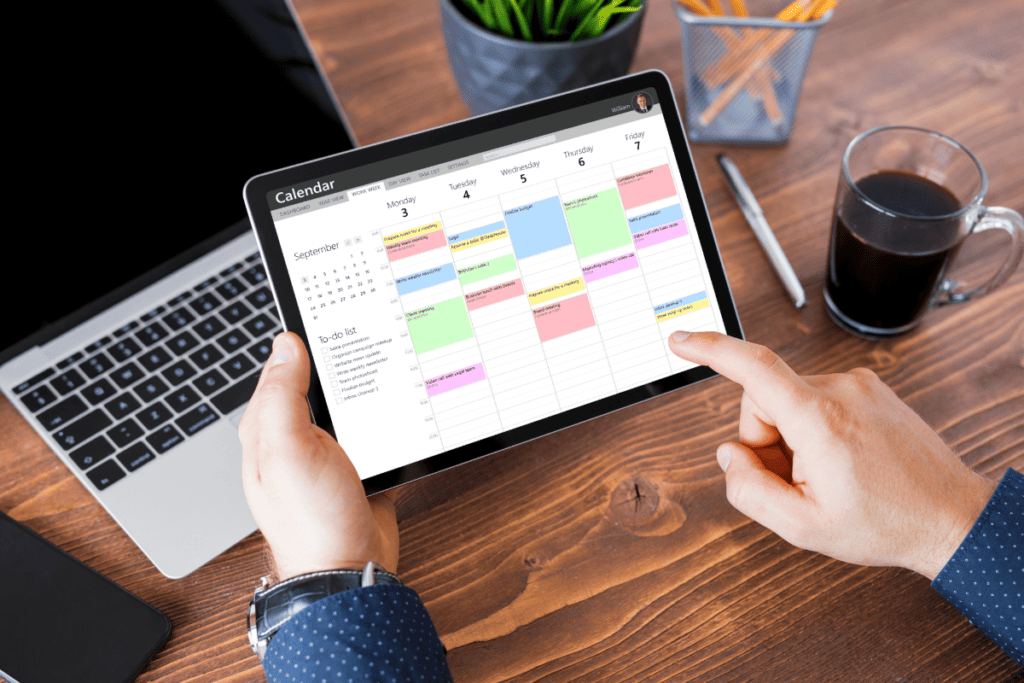
The most effective approach treats your time as a unified whole rather than separate “work” and “life” buckets competing for hours.
Scheduling What Matters
Schedule personal priorities directly into your calendar with the same respect you give work meetings:
- Morning routines (6:30-7:30 AM): Exercise, meditation, family breakfast
- Work blocks (8:00 AM-6:00 PM): Focused work with breaks
- Family time (6:00-8:00 PM): Dinner, connection time
- Personal time (8:00-10:00 PM): Hobbies, self-care
- Weekend protection: Non-work activities scheduled first
When personal commitments appear with reminders through WhatsApp for calendar events, they become non-negotiable. For building sustainable routines, how to plan your day everyday productivity made easy offers strategies for integrating all life areas.
Balance Strategies Comparison Table
| Strategy | Time Required | Difficulty | Impact Level | Sustainability |
| Calendar-first scheduling | 30 min weekly setup | Medium | Very High | Excellent – becomes automatic |
| Flexible work hours | Requires employer buy-in | Low | High | Excellent – permanent change |
| Digital boundaries | Daily discipline | Medium | High | Good – needs consistency |
| Delegation at work/home | Setup time varies | High | Very High | Excellent – ongoing benefit |
| Regular breaks | 5-10 min hourly | Very Low | Medium | Good – easy to maintain |
| Defined work hours | Decision needed | Medium | High | Fair – requires enforcement |
| Weekly planning ritual | 20-30 min weekly | Low | Very High | Excellent – compounds over time |
Building Non-Negotiable Boundaries
- Time Boundaries: Firm start/end times, shutdown rituals, no-meeting blocks, protected evenings.
- Communication Boundaries: Email response expectations, no work notifications outside hours, scheduled message checks.
- Mental Boundaries: Physical workspace separation, transition rituals, tech-free zones, protected sleep.
The Weekly Balance Blueprint
- Sunday Planning (20-30 minutes): Review deadlines, schedule personal priorities, identify conflicts, block focus time, plan family activities.
- Daily Check-ins (5 minutes): Morning review; evening assessment and adjustments.
- Monthly Review (1-2 hours): Evaluate balance, adjust commitments, plan ahead.
Technology: Helper or Hindrance?
For Better Balance: Unified calendar, WhatsApp reminders for calendar events, automated scheduling, time tracking, family calendar sharing.
To Limit: Constant email checking, social media scrolling, work apps on personal devices, interrupting notifications.
Frequently Asked Questions
Q: How do I achieve work-life balance with demanding job requirements?
A: Balance doesn’t mean equal hours, it means sustainable integration. Schedule important work during peak productivity, delegate what others can handle, and protect specific personal time as fiercely as client meetings. Focused 8-hour days often accomplish more than scattered 12-hour days.
Q: What if my company culture doesn’t support balance?
A: Start with what you control: your schedule, boundaries, and priorities. Schedule personal commitments first, then fit work around them. If the culture truly punishes boundaries, consider whether the long-term health cost is worth staying.
Q: How can I balance work and family when both need me?
A: Use calendar visibility to prevent conflicts before they happen. Share your work calendar with family and family commitments with your team. Schedule family time as “meetings” that get the same protection as work obligations.
Q: Is perfect work-life balance achievable?
A: Perfect balance is a myth, but sustainable integration is achievable. Some weeks lean toward work, others toward personal life. The goal is returning to equilibrium rather than maintaining perfect 50/50 splits daily.
Taking Action This Week
This week, start with three actions:
- Schedule your non-negotiables: Block personal priorities in your calendar for the entire week with reminders
- Define work boundaries: Establish firm work hours and communicate them
- Create a planning ritual: Schedule 30 minutes this Sunday to review and plan next week
The calendar-first approach transforms balance from a constant struggle into an automatic system. When your entire life appears on one unified timeline, you can see imbalance before it becomes crisis and adjust proactively.
True balance isn’t about perfect equilibrium, it’s about designing a life where work supports your larger goals rather than consuming them.