

Vision boards have become a staple in goal-setting rituals, and for good reason. They provide a tangible, visual representation of your dreams and aspirations. As you look ahead to 2026, creating a vision board can help you clarify what truly matters and keep those priorities front and center throughout the year.
But here’s what most people miss: a beautiful vision board without an action plan is just pretty inspiration. The magic happens when you combine visual motivation with concrete planning. That’s where integrating your vision board with a calendar-first approach transforms wishful thinking into real progress.
In this guide, you’ll discover creative vision board ideas that work for different goals and personalities, plus practical strategies to turn those inspiring images into scheduled actions using Fhynix’s unified planning system.
Why Vision Boards Work (When Done Right)
Vision boards tap into the psychology of visualization. When you regularly see images representing your goals, your brain starts recognizing opportunities and resources that support those objectives. It’s not magic: it’s your reticular activating system at work, filtering information based on what you’ve told it matters.
However, visualization alone isn’t enough. Research shows that while vision boards increase motivation, they need to be paired with concrete action planning to produce meaningful results. People who create vision boards and then schedule specific steps toward their goals are significantly more likely to achieve them than those who simply visualize.
The most effective approach combines the emotional pull of visual inspiration with the practical structure of calendar-based planning. Your vision board answers the “what” and “why,” while your daily schedule handles the “when” and “how.”
Digital vs Physical Vision Boards in 2026
The debate between digital and physical vision boards continues, but the truth is, both formats have unique advantages.
- Physical vision boards offer a tactile creation experience. Cutting images, arranging them ona poster board, and placing your finished board somewhere visible creates a memorable, engaging process that reinforces your commitment to these goals.
- Digital vision boards provide flexibility and accessibility. You can create them using apps like Canva, Pinterest boards, or digital collage tools. The ability to update them easily, organize multiple boards for different life areas, and access them from any device makes digital boards particularly practical for modern goal-setting.
Many people find success with a hybrid approach in 2026. Create a physical board for your home or office where you’ll see it daily, and maintain a digital version on your phone for on-the-go inspiration. Some even photograph their physical boards to keep them accessible digitally.
Whatever format you choose, the key is visibility. Your vision board should be somewhere you’ll actually see it regularly, not tucked away in a closet or buried in phone folders you never open.
Vision Board Themes for Different Life Areas
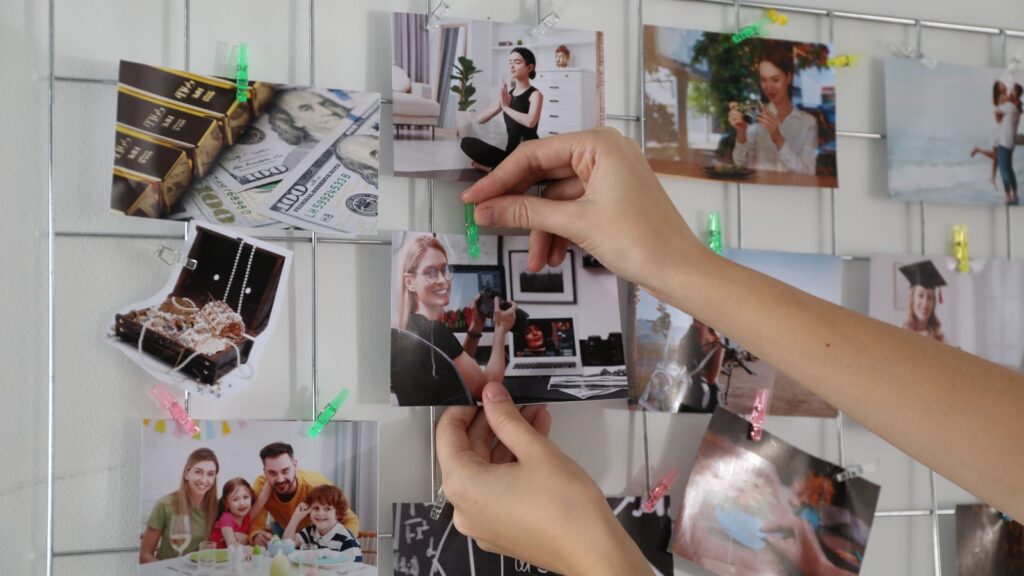
1. Career and Professional Development
Your career section should reflect both your professional aspirations and the lifestyle those achievements will enable. Include images of your ideal work environment, whether that’s a collaborative office space, a peaceful home studio, or locations representing remote work freedom.
Add visual representations of skills you want to develop. If you’re pursuing certifications or training, include logos or course imagery. If you’re building a personal brand, add elements representing your desired professional identity. Salary milestones, leadership positions, or specific projects you want to lead all deserve space on your board.
Consider the time management tools and systems you’ll need to support these career goals. Professional growth requires consistent effort, so thinking about your work habits now sets you up for success.
2. Health and Wellness Goals
Wellness encompasses more than just fitness. Your health section should include physical, mental, and emotional well-being. Add images of nutritious meals you want to learn to prepare, outdoor activities you want to try, or peaceful environments representing the mental clarity you’re seeking.
Include specific fitness milestones like race distances, strength goals, or flexibility achievements. If you’re working on building healthy habits, find images representing those daily practices: morning stretches, meditation, adequate sleep, or hydration goals.
Mental health deserves equal space. Images of therapy, journaling, creative expression, or activities that reduce stress should all be represented. Remember, sustainable wellness requires consistent small actions, not sporadic bursts of intense effort.
3. Relationships and Connection
Relationship goals often get overlooked on vision boards, but they’re crucial for overall life satisfaction. Include images representing quality time with family, romantic relationship goals, or friendship experiences you want to cultivate. This might be cooking together, travel adventures, game nights, or simple quiet moments of connection.
If you’re using a shared family calendar, your vision board can include family traditions you want to establish or strengthen. Community involvement, volunteer work, or social causes you want to support also belong in this section.
For couples or families creating boards together, this becomes a powerful tool for aligning on shared priorities and ensuring everyone’s individual goals get support and space.
4. Financial Freedom and Security
Money goals deserve honest representation. Include specific savings targets, debt payoff milestones, or investment objectives. Represent your “why” behind financial goals: is it early retirement, travel freedom, educational opportunities, or the security of an emergency fund?
Beyond numbers, consider what financial stability means emotionally. Images representing security, generosity, or experiences that money enables help connect your financial planning to your deeper values. Whether it’s funding a business dream, supporting causes you care about, or simply reducing money-related stress, visualize the feeling, not just the figures.
5. Personal Growth and Learning
Personal development transforms who you are, not just what you do. Include books you want to read (add their actual covers for specificity), courses you want to take, skills you want to master, or languages you want to learn. If you’re working toward specific personal development goals, find images representing characteristics you want to develop like confidence, patience, or creativity.
This section might include creative projects, hobbies to explore, or experiences pushing you outside your comfort zone. Travel destinations that will broaden your perspective, cultural experiences, or challenges that will help you grow all fit here.
Creative Assembly Techniques
The Wheel of Life Method
Divide your board into pie-slice sections representing different life areas: career, health, relationships, finances, personal growth, recreation, and contribution. This circular layout ensures balanced attention across all important areas and makes it easy to spot where you might be overemphasizing one area at the expense of others.
The Timeline Approach
Instead of organizing by category, arrange your vision board chronologically through 2026. Start with first-quarter goals on the left or top, progressing through the year. This naturally aligns with time blocking and calendar planning and makes it clear which goals deserve immediate focus versus later attention.
Word and Affirmation Integration
Use words, phrases, and affirmations alongside images to strengthen your vision board. Include inspiring quotes, single-word qualities (e.g., courage, abundance), or personal affirmations. Varying fonts, colors, and styles, combining hand-lettering and printed words, enhances visual interest and creates stronger neural connections to your goals.
The Progress-Tracking Hybrid
Integrate tracking elements like checkboxes, habit grids, or progress graphics directly into your vision board for functionality. While the board sets the overall vision, detailed progress is best tracked in a dedicated planning system, linking the board to a calendar for a complete achievement system.
Turning Your Vision Board into Calendar Action
Creating your vision board is the exciting part. The harder work is translating those inspiring images into daily and weekly actions that actually move you forward. This is where most vision boards fail, but it’s also where structured planning makes the difference.
1. Breaking Down Visual Goals
Look at each section of your vision board and identify the major goals represented. Then break each goal into specific, actionable steps. If your board includes completing a certification, your action steps include researching programs, completing applications, scheduling study time, and setting exam dates.
With a natural language planning system, adding these tasks becomes simple. Say “Research certification programs Saturday morning” or “Study for exam every Tuesday and Thursday at 7 pm” and they appear in your calendar timeline. This natural approach removes friction from capturing action steps.
2. Scheduling Regular Vision Reviews
Your vision board isn’t a one-time creation. Schedule monthly review sessions to assess progress, celebrate wins, and adjust goals. These reviews help you identify which areas need more attention and which goals might need modification based on changing circumstances.
During these sessions, look at your vision board alongside your calendar to spot disconnects. If health is prominent on your board but your schedule shows no workouts scheduled, that’s a red flag requiring adjustment.
3. Creating Supporting Daily Habits
Behind every big goal on your vision board are daily or weekly habits that support it. Writing a book requires daily writing time. Running a marathon requires consistent training. Building a business requires regular customer outreach or product development.
Identify these keystone habits for each major vision board goal. Then build them into your daily schedule using recurring tasks. Consistent habit tracking helps you maintain momentum and visualize your progress over time, creating forward movement toward your bigger objectives.
4. Using Color-Coded Categories
A color-coded calendar helps you visually balance different life areas throughout your week. Assign colors matching your vision board sections: blue for career tasks, green for health activities, red for relationships, and yellow for personal development.
At a glance, you can see if you’re neglecting certain areas. If your week is all blue (work) with no green (health) or red (relationships), you can proactively rebalance before the week ends. This visual feedback from a unified task and calendar system keeps you aligned with your whole-life vision, not just your most urgent tasks.
Making Vision Boards Work for Different Situations

Family Vision Boards
Creating a vision board as a family aligns everyone on shared priorities and ensures individual goals get space and support. Let each family member contribute their personal goals while also identifying shared family objectives like vacations, home improvements, or traditions you want to establish.
When children see their activities on the family vision board and scheduled in your family calendar, they learn how dreams become reality through planning.
Professional or Team Vision Boards
Teams can create shared vision boards for group goals. This works well for project teams, small businesses, or departments working toward common objectives. Include both performance metrics and culture goals, like team bonding activities or learning opportunities.
When everyone contributes to and sees the shared vision using a shared calendar app, accountability increases and collaboration improves.
Maintaining Momentum Through 2026
Monthly Progress Rituals
Schedule a monthly date with yourself to review your vision board and calendar together. Ask: Which goals am I progressing on? Which needs more attention? What’s working? What needs to change? These regular check-ins prevent your vision board from becoming decorative wallpaper.
Update your calendar for the upcoming month with specific actions supporting your vision. This regular planning rhythm with a comprehensive life goals planner ensures activities align with bigger goals rather than getting lost in busy work.
Celebrating and Updating
When you achieve something from your vision board, mark it. Add a “completed” stamp, move it to a “wins” section, or replace it with your next milestone. Visible progress is incredibly motivating and reminds you that your efforts produce real results.
Share wins with accountability partners or in community spaces where others pursue similar goals. Celebration reinforces positive momentum and makes the journey more enjoyable, not just something to endure until you reach the destination.
Adjusting Without Guilt
Life changes, and your goals should too. If something on your vision board no longer resonates, you have full permission to remove it. Maybe that goal reflected someone else’s expectations rather than your authentic desires. Maybe your priorities shifted due to life changes. Both scenarios are completely valid.
Remove what doesn’t serve you and add what does. Your vision board is a tool for your fulfillment, not a contract you’re obligated to honor regardless of circumstances. The flexibility to adjust keeps your board relevant and meaningful throughout the year.
Conclusion
A vision board for 2026 gives you clarity about where you want to go, but daily actions in your calendar actually get you there successfully. By combining visual inspiration with structured planning, you create a unified system where every task connects to your bigger vision and life goals.
The key is choosing the right tools to support your journey effectively and consistently. Whether you prefer best daily routine applications for habit building or comprehensive online planners for managing all life aspects, consistency matters more than perfection. Start creating your vision board this week and identify priorities.
Ready to turn your 2026 vision into scheduled action today? Install Fhynix now and add goals instantly through voice commands or natural text input. With color-coded calendar views showing your progress clearly, WhatsApp reminders ensuring accountability, and habit tracking features building daily consistency, your vision board transforms from inspiration into measurable progress.
Frequently Asked Questions
How detailed should my 2026 vision board be?
Balance specificity with flexibility. Include specific images to represent your goals, but not so rigid that you can’t adjust as circumstances change. Aim for 5-10 major goals across different life areas rather than trying to represent every objective.
What if my goals change during the year?
Change is natural and healthy. Review your board quarterly and give yourself full permission to remove goals that no longer serve you and add new ones that better reflect your current values. Your vision board should evolve with you, just like your daily planner adapts to changing priorities.
Should I share my vision board publicly or keep it private?
This depends on your personality. Some people find accountability in sharing, while others prefer privacy until goals manifest. Neither approach is better: choose what feels authentic and motivating for you.
How do I stay motivated when progress feels slow?
Remember that meaningful change takes time. Use your monthly reviews to identify small wins you might be overlooking. Break big goals into smaller milestones so you experience more frequent success. And most importantly, ensure your calendar includes regular actions with a well-structured to-do list, because consistency beats intensity.
Can vision boards work for short-term goals?
While vision boards typically focus on annual or longer-term goals, you can create quarterly or monthly mini-boards for shorter timeframes and priorities. These work well alongside your annual board to maintain focus on immediate priorities.