

A well-structured daily routine is the foundation of success for any student. Whether you’re in school or college, managing your time effectively can improve academic performance, reduce stress, and create a balanced lifestyle.
In this guide, we’ll explore the definition of a daily routine, its importance, benefits, and how to create the perfect daily schedule. We’ll also discuss common pitfalls to avoid and why mental and physical well-being should be a priority. Also, you can download Fhynix here ios or android and use Fhynix AIto easily add your schedule
Build this routine in 2 minutes – for free
Add your class schedule with voice
Get WhatsApp reminders before study blocks
Track habits & assignments in one unified calendar
⭐ Free tier • No credit card needed • 4.7 stars
What is a Daily Routine?
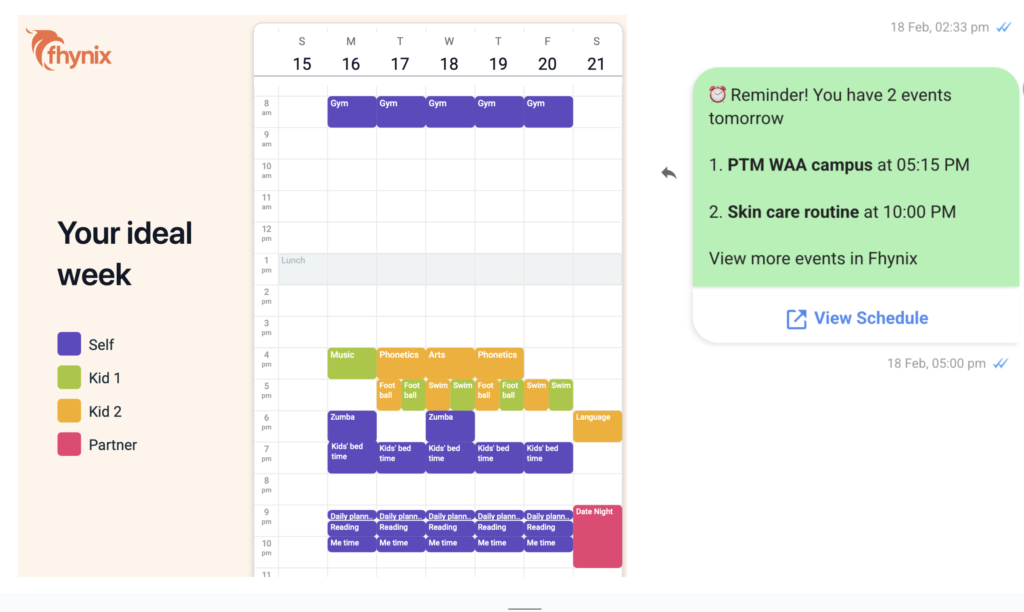
A daily routine is a set of structured activities that a person follows regularly. It includes everything from study sessions and extracurricular activities to meals, relaxation, and sleep. A well-balanced routine ensures that all aspects of life, academic, personal, and social—are given the right amount of attention.
For students, a balanced routine typically includes:
- Academic time: Classes, lectures, studying, homework, and exam preparation
- Physical health: Exercise, sports, yoga, or outdoor activities
- Mental wellness: Meditation, journaling, hobbies, and social time
- Basic needs: Sleep, meals, hygiene, and personal care
Leisure activities: Entertainment, social engagement, and creative pursuits
Why Daily Routines Matter: The Science Behind Success
Research consistently demonstrates that students with structured routines outperform their peers academically while experiencing less stress and better overall health.
5 Evidence-Based Benefits of Daily Routines
| Benefit | Impact | Research Support |
| Improved Time Management | Students allocate specific time slots for activities, ensuring productivity and reducing wasted time | Harvard Business Review study on genius routines |
| Reduced Stress & Anxiety | Knowing what comes next eliminates uncertainty and decision fatigue, lowering cortisol levels | American Psychological Association research on study habits |
| Enhanced Academic Performance | Consistent study schedules improve concentration, information retention, and exam scores by 15-30% | National Institute of Health meta-analysis on learning patterns |
| Better Physical Health | Regular exercise and sleep schedules strengthen immune function and energy levels | Mayo Clinic guidelines on student fitness |
| Stronger Mental Discipline | Following routines builds self-control, punctuality, and responsibility—skills that extend beyond academics | Multiple longitudinal studies on habit formation |
The Psychology of Routine Success
When you follow a consistent schedule, your brain creates neural pathways that automate decisions, reducing the mental energy required for daily tasks. This “decision automation” frees cognitive resources for complex problem-solving, creative thinking, and deep learning—exactly what academic success demands.
Build this routine in 2 minutes – for free
Add your class schedule with voice
Get WhatsApp reminders before study blocks
Track habits & assignments in one unified calendar
⭐ Free tier • No credit card needed • 4.7 stars
Importance of a Daily Routine for Students
Having a consistent daily routine is crucial for students as it helps in time management, discipline, and achieving goals efficiently. Without a structured plan, students often struggle with procrastination, stress, and an imbalance between studies and personal life.
5 Benefits of a Daily Routine
- Improves Time Management: A routine helps students allocate specific time slots for different activities, ensuring productivity and efficiency. HBR
- Reduces Stress and Anxiety: Knowing what needs to be done at a specific time helps eliminate uncertainty and reduces stress.American Psychological Association
- Enhances Academic Performance: A planned study schedule allows better concentration and retention of information. National Institue of Health
- Promotes a Healthy Lifestyle: Scheduling time for exercise, meals, and sleep ensures overall well-being. Mayo Clinic
- Builds Good Habits: Following a routine consistently helps develop positive habits like punctuality, discipline, and responsibility.
The Ideal Daily Routine for Students: Complete Time-Block Schedule
This evidence-based schedule balances academic rigor with physical health, mental wellness, and social connection. Customize the timing based on your specific class schedule and personal preferences.
Morning Routine (5:30 AM – 8:30 AM): Start Strong
| Time | Activity | Purpose & Benefits |
| 5:30-6:00 AM | Wake up + Hydration | Drink 16-20 oz water immediately; hydration boosts brain function by 30% |
| 6:00-6:45 AM | Exercise or Yoga | Morning exercise releases endorphins and dopamine, improving focus for 6-8 hours |
| 6:45-7:15 AM | Shower + Get Ready | Fresh start signals your brain that productive time begins |
| 7:15-7:45 AM | Healthy Breakfast | Protein + complex carbs stabilize blood sugar for sustained mental energy |
| 7:45-8:15 AM | Review Yesterday’s Notes | 15-minute review increases retention by 40% through spaced repetition |
| 8:15-8:30 AM | Plan Today’s Priorities | Write down top 3 tasks; students who plan perform 25% better |
Pro Tip: Use Fhynix’s voice input feature to quickly add your class schedule and study blocks while getting ready in the morning.
School/College Hours (8:30 AM – 3:30 PM): Maximize Learning
| Time | Activity | Optimization Strategy |
| 8:30 AM-12:30 PM | Classes & Lectures | Sit in front rows; take handwritten notes (21% better retention than typing) |
| 12:30-1:15 PM | Lunch + Social Time | Eat mindfully; social connection reduces academic stress |
| 1:15-3:30 PM | Afternoon Classes | Stay hydrated; use bathroom breaks to stretch and reset focus |
| 3:30-4:00 PM | Extracurriculars | Sports, clubs, or creative activities prevent burnout |
Study Hack: Between classes, review notes from the previous session for just 5 minutes. This “micro-revision” technique dramatically improves long-term retention.
Afternoon & Evening Routine (4:00 PM – 10:00 PM): Deep Work & Recovery
| Time | Activity | Purpose & Benefits |
| 4:00-4:30 PM | Snack + Mental Break | Healthy snack prevents energy crash; 30-min break recharges focus |
| 4:30-6:30 PM | Deep Study Session 1 | Tackle hardest subjects first when mental energy is still high |
| 6:30-7:30 PM | Physical Activity | Walk, jog, sports, or outdoor play—essential for stress release |
| 7:30-8:15 PM | Dinner with Family | Social meals improve mental health and provide emotional support |
| 8:15-9:45 PM | Deep Study Session 2 | Review, homework, and lighter tasks; avoid new complex material |
| 9:45-10:00 PM | Pack Bag + Prep Tomorrow | Reduces morning stress; improves punctuality |
Night Routine (10:00 PM – 5:30 AM): Recovery is Progress
| Time | Activity | Sleep Science Benefits |
| 10:00-10:30 PM | Wind-Down Ritual | Reading, journaling, or meditation signals bedtime to your brain |
| 10:30 PM | Phone Away | Blue light disrupts melatonin; keep devices outside bedroom |
| 10:30-5:30 AM | Sleep (7+ hours) | Students sleeping 7-9 hours score 10-15% higher on tests |
Critical Rule: Protect your sleep schedule fiercely. Sleep deprivation impairs cognitive function equivalent to being legally drunk.
Build this routine in 2 minutes – for free
Add your class schedule with voice
Get WhatsApp reminders before study blocks
Track habits & assignments in one unified calendar
⭐ Free tier • No credit card needed • 4.7 stars
The Ideal Daily Routine for a Student
A well-rounded student routine includes time for studies, physical health, mental well-being, and social interactions. Here’s what an ideal daily routine might look like:
Morning Routine
- 6:00 AM – Wake Up & Freshen Up: Start the day with a refreshing morning routine.
- 6:30 AM – Exercise or Meditation: Engage in physical activities like yoga, stretching, or a quick workout.
- 7:00 AM – Healthy Breakfast: A nutritious meal fuels the body and mind for the day.
- 7:30 AM – Revise Notes: Spend some time going over the previous day’s lessons.
- 8:00 AM – Get Ready & Leave for School/College
Daytime Routine (School/College Hours)
- 8:30 AM – 3:00 PM – Classes and Learning: Stay focused during school or college hours.
- 12:30 PM – Lunch Break: A balanced meal keeps energy levels up.
- 3:00 PM – 4:00 PM – Extracurricular Activities: Engage in sports, music, or any hobby to maintain a balance.
Evening Routine
- 4:30 PM – Take a Short Break: Relax and unwind for 30 minutes.
- 5:00 PM – Study & Homework: Focus on assignments, revision, and exam preparation.
- 7:00 PM – Light Physical Activity: Go for a walk, jog, or engage in sports.
- 7:30 PM – Dinner with Family: Social interactions help in mental relaxation.
- 8:30 PM – Night Study Session: Revise and prepare for the next day.
Night Routine
- 9:30 PM – Relaxation Time: Read a book, journal, or meditate.
- 10:00 PM – Sleep: Aim for at least 7-8 hours of rest for a fresh start the next day.
5 Pitfalls to Avoid While Building a Daily Routine
- Overloading the Schedule: A jam-packed schedule leaves no room for flexibility, leading to burnout. Time Management Research by Oxford
- Ignoring Breaks and Leisure Time: Continuous studying without relaxation leads to stress and decreased efficiency.
- Focusing Only on Academics: Neglecting mental health, fitness, and social interactions can create an imbalance.
- Skipping Sleep for Study: Lack of sleep affects concentration, memory, and overall health.
- Not Adapting to Changes: A rigid routine that doesn’t accommodate changes or emergencies can cause frustration.
Implementing a daily routine with Fhynix
You can use the fhynix app to quickly schedule any routines and set whatsapp reminders. Setting a routine is the 1st step. But more important is to adhere to it. It is easy to miss it and get down a rabbit hole on tiktok or socialize too much leading to missing study time or health. Hence apps and whatsapp reminders can be a great way to stay disciplined. Read here to see how to set whatsapp reminders

Why Mental Health and Physical Fitness Should be a Non-Negotiable in Your Daily Routine
A productive daily routine is not just about studying—it’s about maintaining a balanced lifestyle. Prioritizing mental and physical well-being ensures long-term success and happiness. Mental and physical health impact focus, energy levels, and emotional stability, making them essential components of a student’s daily routine.
Mental Health Activities and Their Benefits:
- Meditation and Deep Breathing – Releases dopamine and serotonin, which help regulate mood and reduce stress. Headspace
- Journaling – Helps in emotional processing by stimulating oxytocin, the hormone linked to relaxation and bonding.
- Spending Time with Loved Ones – Social interactions increase oxytocin and endorphins, improving emotional resilience and happiness.
Physical Fitness Activities and Their Benefits:
- Daily Exercise – Activities like running or sports release endorphins and dopamine, enhancing focus, motivation, and mood.
- Healthy Eating Habits – Proper nutrition balances insulin and cortisol levels, improving energy, metabolism, and mental clarity.
- Proper Sleep Schedule – Sleep regulates melatonin and cortisol, which control stress, recovery, and overall physical well-being.
By integrating these activities into a daily schedule, students can ensure they are not only excelling academically but also nurturing their overall well-being.
Build this routine in 2 minutes – for free
Add your class schedule with voice
Get WhatsApp reminders before study blocks
Track habits & assignments in one unified calendar
⭐ Free tier • No credit card needed • 4.7 stars
Study Schedule Variations by Student Type
Different academic levels and learning styles require routine adjustments:
High School Students (Ages 14-18)
Key Focus: Balance academics with social development and extracurriculars
- Wake time: 6:00-6:30 AM
- Study time: 2-3 hours daily (split between afternoon and evening)
- Sleep target: 8-10 hours (teens need more sleep than adults)
- Social time: 1-2 hours daily (crucial for emotional development)
College/University Students (Ages 18-25)
Key Focus: Independent time management and deeper learning
- Wake time: 5:30-7:00 AM (depends on class schedule)
- Study time: 3-5 hours daily (more for STEM majors or exam periods)
- Sleep target: 7-9 hours (non-negotiable for academic performance)
- Part-time work: Maximum 15-20 hours weekly (more impacts grades)
Graduate/Professional Students
Key Focus: Research, specialized study, and work-life balance
- Wake time: 5:00-6:30 AM
- Study/Research time: 4-6 hours daily
- Sleep target: 7-8 hours minimum
- Self-care: Mandatory daily breaks to prevent burnout
Advanced Study Techniques: Quality Over Quantity
Simply sitting at a desk doesn’t equal productive studying. Use these evidence-based techniques:
The Pomodoro Technique for Students
- Study intensely for 25 minutes (one “Pomodoro”)
- Take 5-minute break (stand, stretch, hydrate)
- Repeat 4 times, then take 15-30 minute longer break
- Track completed Pomodoros to see progress
Why it works: Matches your brain’s natural attention span; prevents mental fatigue; creates sense of accomplishment
Active Recall vs. Passive Review
| Method | Effectiveness | Example |
| Passive Review (reading notes) | Low (20% retention) | Reading highlighted textbook pages |
| Active Recall (testing yourself) | High (70% retention) | Flashcards, practice problems, teaching concepts aloud |
| Spaced Repetition | Very High (80%+ retention) | Review material at increasing intervals (1 day, 3 days, 1 week, 1 month) |
Action Step: Use Fhynix’s habit tracking feature to schedule spaced repetition review sessions automatically.
Time Blocking for Academic Success
Time blocking means assigning specific tasks to specific time slots rather than using vague to-do lists.
Example: Instead of “Study biology today,” block “4:30-5:30 PM: Complete Chapter 7 practice problems and create summary notes.”
Benefits:
- Prevents procrastination (you know exactly when to start)
- Creates realistic expectations (you see how much time you actually have)
- Reduces decision fatigue (no wondering “what should I study now?”)
Implementation: Fhynix’s calendar-first approach places study blocks directly in your timeline alongside classes and activities, giving you a realistic daily view.
Build this routine in 2 minutes – for free
Add your class schedule with voice
Get WhatsApp reminders before study blocks
Track habits & assignments in one unified calendar
⭐ Free tier • No credit card needed • 4.7 stars
5 Critical Mistakes Students Make (And How to Avoid Them)
1. Overloading the Schedule
The Problem: Scheduling 10 hours of study on a day with 4 hours of classes leaves no time for meals, breaks, or unexpected events.
The Solution: Use the “50% Rule”—only schedule 50% of your free time. If you have 4 hours free, plan 2 hours of focused study. This buffer prevents burnout and accommodates reality.
2. Ignoring Physical Health
The Problem: Skipping exercise and eating junk food to “save time” for studying actually reduces cognitive performance by 20-30%.
The Solution: Non-negotiable daily movement (minimum 30 minutes) and three balanced meals. Your brain requires physical health to function optimally.
3. All-Work, No-Play Schedule
The Problem: Scheduling only academic activities leads to burnout, resentment, and eventual abandonment of the routine.
The Solution: Schedule fun activities, hobbies, and social time just as seriously as study time. Balance isn’t optional—it’s essential for sustainable success.
4. Sacrificing Sleep for Study
The Problem: Staying up late to study seems productive but actually impairs memory consolidation, reducing the effectiveness of that study time by 40-50%.
The Solution: Prioritize 7-9 hours of sleep. If you’re short on time, study less but sleep fully—you’ll retain more and perform better.
5. Rigid Routines Without Flexibility
The Problem: Life is unpredictable. A schedule that can’t accommodate sick days, family events, or spontaneous opportunities becomes a source of stress.
The Solution: Build in “buffer time” and weekly “catch-up” blocks. Accept that some days won’t go perfectly—consistency over weeks matters more than perfection on any single day.
Mental Health & Physical Fitness: The Foundation of Academic Success
Academic achievement without wellness is unsustainable. Your routine must protect both mental and physical health.
Essential Mental Health Practices
| Activity | Frequency | Neurochemical Benefit | Impact on Studies |
| Meditation or Deep Breathing | Daily, 10-15 min | Increases serotonin & dopamine; reduces cortisol | Improved focus, reduced test anxiety |
| Journaling | Daily, 5-10 min | Releases oxytocin; processes emotions | Better emotional regulation, clearer thinking |
| Social Connection | Daily, 30-60 min | Increases oxytocin & endorphins | Reduced loneliness, improved motivation |
| Creative Hobbies | 3-4x weekly | Dopamine release; flow states | Enhanced problem-solving, stress relief |
| Nature Time | 3-4x weekly | Reduces cortisol; increases serotonin | Improved mood, better sleep |
Critical Physical Health Habits
| Activity | Frequency | Physical Benefit | Academic Impact |
| Cardiovascular Exercise | 4-5x weekly, 30-45 min | Releases endorphins; improves cardiovascular health | 20% better focus, improved memory |
| Strength Training | 2-3x weekly | Builds muscle; releases testosterone & growth hormone | Increased energy, better sleep quality |
| Stretching or Yoga | Daily, 10-20 min | Reduces muscle tension; improves flexibility | Reduced physical stress, better posture for studying |
| Proper Hydration | Throughout day (8-10 glasses) | Optimizes brain function; prevents fatigue | 30% better cognitive performance |
| Balanced Nutrition | 3 meals + 2 snacks daily | Stable blood sugar; adequate nutrients for brain | Sustained energy, better concentration |
| Quality Sleep | 7-9 hours nightly | Consolidates memories; repairs body | Critical for retention and test performance |
Important: Mental health isn’t a reward for finishing work—it’s the foundation that makes work possible. Schedule wellness activities first, then fit academics around them.
Build this routine in 2 minutes – for free
Add your class schedule with voice
Get WhatsApp reminders before study blocks
Track habits & assignments in one unified calendar
⭐ Free tier • No credit card needed • 4.7 stars
Using Technology to Build Better Routines
Modern planning apps can automate reminders and reduce the mental burden of routine management.
Fhynix: Your AI-Powered Academic Planner
Fhynix helps students maintain routines through:
- Voice Input Scheduling: Say “Chemistry lab every Tuesday 2 PM” and it’s automatically added with reminders
- Calendar-First Timeline: See classes, study blocks, and personal time in one unified view
- WhatsApp Reminders: Get reminders via WhatsApp 24 hours before and 10 minutes before each task—no checking apps required
- Habit Tracking: Monitor consistency with morning routines, exercise, study sessions, and sleep schedules
- Color-Coded Organization: Instantly distinguish between academics, personal time, health, and social activities
Student Success Story: “As a college student, Fhynix helped me manage my classes, assignments, and reminders. The WhatsApp notifications kept me on track without constantly checking my phone.”
Download Fhynix: iOS | Android
Other Helpful Planning Tools
- Forest App: Gamifies focus time by growing virtual trees when you avoid your phone
- Notion: Comprehensive note-taking and task management (better for older students)
- Anki: Spaced repetition flashcard system for memorization
- RescueTime: Tracks where your time actually goes on devices
Creating Your Personalized Routine: Step-by-Step Process
Follow this process to build a routine that actually fits your life:
Step 1: Audit Your Current Schedule (Week 1)
Track everything you do for one week without changing anything. Note:
- When you wake up and sleep
- Class and meal times
- Study duration and effectiveness
- Exercise and social time
- Time wasted or unproductive periods
Step 2: Identify Non-Negotiables (Week 1)
List activities you cannot change:
- Fixed class times
- Mandatory commitments (work, family responsibilities)
- Minimum sleep requirement (7-9 hours)
- Commute time
Step 3: Design Your Ideal Routine (Week 2)
Using the schedules above as templates:
- Block out non-negotiables first
- Add 7-9 hours sleep time
- Schedule 30+ minutes daily exercise
- Add 2-4 hours study time (adjust by academic level)
- Include 30-60 minutes social/leisure time
- Leave 1-2 hours daily as flexible buffer time
Step 4: Test and Adjust (Weeks 2-4)
Implement your routine for 2-3 weeks, then evaluate:
- Which parts worked well?
- Where did you consistently struggle?
- What unexpected time drains appeared?
- How do you feel physically and mentally?
Step 5: Optimize and Commit (Week 5+)
Make final adjustments based on testing, then commit to your routine for at least 30 days. Habit formation requires consistency—trust the process.
Build this routine in 2 minutes – for free
Add your class schedule with voice
Get WhatsApp reminders before study blocks
Track habits & assignments in one unified calendar
⭐ Free tier • No credit card needed • 4.7 stars
Weekly Planning vs. Daily Planning
Effective routines operate on both timescales:
Sunday Planning Session (30-45 minutes)
Review the upcoming week:
- Major deadlines and exam dates
- Social events or appointments
- Meal planning and grocery needs
- Goal-setting for the week
This prevents surprises and helps you prepare mentally.
Daily Planning Session (10-15 minutes)
Every evening or morning:
- Review today’s schedule
- Adjust for any changes
- Set your top 3 priorities
- Prepare materials needed
For more on planning approaches, read How to Plan Your Day Effectively.
Sample Weekly Schedules for Different Students
High School Student (With Sports)
Monday-Friday:
- 6:00 AM: Wake, exercise
- 7:00 AM: Breakfast, review notes
- 8:00 AM-3:00 PM: School
- 3:30-5:30 PM: Sports practice
- 6:00-7:00 PM: Dinner, family time
- 7:30-9:00 PM: Homework, study
- 9:30-10:00 PM: Wind down
- 10:00 PM: Sleep
Weekend:
- Saturday: Longer study sessions (2-3 hours), sports games, social time
- Sunday: Meal prep, weekly planning, lighter review, family time
College Student (Part-Time Job)
Monday/Wednesday/Friday:
- 6:00 AM: Wake, exercise
- 7:30-11:30 AM: Morning classes
- 12:00-4:00 PM: Part-time work
- 4:30-7:00 PM: Study session 1
- 7:30-8:30 PM: Dinner, break
- 8:30-10:00 PM: Study session 2
- 10:30 PM: Sleep
Tuesday/Thursday:
- 7:00 AM: Wake, exercise
- 9:00 AM-3:00 PM: Classes (with lunch break)
- 3:30-6:30 PM: Deep study time (library)
- 7:00-9:00 PM: Dinner, social activities
- 9:30-10:30 PM: Light review
- 11:00 PM: Sleep
Weekend:
- Saturday: Work morning, study afternoon, social evening
- Sunday: Catch-up study, meal prep, weekly planning, rest
Graduate Student (Research Focus)
Monday-Friday:
- 5:30 AM: Wake, meditation, exercise
- 7:00-8:00 AM: Breakfast, email, planning
- 8:00 AM-12:00 PM: Deep research work
- 12:00-1:00 PM: Lunch, walk
- 1:00-4:00 PM: Classes, meetings, admin
- 4:00-4:30 PM: Break
- 4:30-7:00 PM: Writing, analysis
- 7:00 PM onwards: Personal time, dinner, relaxation
- 10:00 PM: Sleep
Weekend:
- One day for catch-up work/research
- One full day OFF for mental health and recovery
Seasonal Adjustments: Exam Period vs. Normal Weeks
Your routine should adapt to academic intensity:
Regular Semester Routine
- Balanced study time (2-4 hours daily)
- Regular exercise and social activities
- Consistent sleep schedule
- Hobby and leisure time included
Exam Preparation Routine (2-3 Weeks Before Exams)
- Increased study time (4-6 hours daily)
- Reduced but not eliminated social time
- Maintained exercise (critical for stress management)
- Strict sleep schedule (MORE important during exams)
- Spaced repetition review intensifies
Warning: Never adopt “exam mode” for entire semesters. This leads to burnout. Use intensive study periods strategically and temporarily.
Build this routine in 2 minutes – for free
Add your class schedule with voice
Get WhatsApp reminders before study blocks
Track habits & assignments in one unified calendar
⭐ Free tier • No credit card needed • 4.7 stars
Frequently Asked Questions (FAQs)
What is the best time to study for students?
The best study time varies by individual chronotype (whether you’re naturally a morning or evening person), but research shows:
- Morning (6-10 AM): Optimal for most students; brain is fresh, distractions are minimal
- Late Morning (10 AM-12 PM): Peak cognitive performance for complex problem-solving
- Afternoon (3-6 PM): Good for review and practice problems after post-lunch dip
- Evening (7-9 PM): Suitable for lighter studying, review, and homework
Worst time: Late night (11 PM-2 AM)—retention drops 40%, sleep suffers, unhealthy pattern develops.
Pro tip: Track your own performance. Study the same material at different times and notice when you focus best and retain more.
How many hours should a student study daily?
Study hours depend on academic level and course difficulty:
- High school students: 1.5-3 hours daily
- College/university students: 2-4 hours daily (rule of thumb: 2-3 hours outside class for every hour in class)
- Graduate students: 4-6 hours daily
- Exam periods: Add 1-2 hours, but maintain sleep and exercise
Quality beats quantity: Two hours of focused, active studying (practice problems, flashcards, teaching concepts) beats five hours of passive reading and highlighting.
What time should students wake up?
Optimal wake time depends on required sleep duration and morning commitments:
- High school students: 6:00-6:30 AM (to get 8-9 hours sleep with 10 PM bedtime)
- College students: 5:30-7:00 AM (depending on first class time)
- General rule: Wake time that allows 7-9 hours sleep + 60-90 minutes morning routine before obligations
More important than specific time: Consistency. Waking at the same time daily (even weekends, within 1 hour) regulates circadian rhythm and improves sleep quality.
How can students balance academics and personal life?
Balance requires intentional scheduling and boundaries:
- Use time blocking: Designate specific hours for academics, exercise, social time, and personal activities
- Schedule fun: Treat personal time as seriously as study time—put it in your calendar
- Set boundaries: When study time ends, fully disconnect from academics
- Combine activities: Study groups provide both academic work and social connection
- Quality over quantity: Efficient studying creates more free time than endless unfocused hours
- Use tools: Apps like Fhynix show your entire day, making balance visible and manageable
Reality check: Perfect balance every day is impossible. Aim for weekly balance instead—some days are heavy on academics, others prioritize personal life.
Should students study on weekends?
Yes, but strategically:
Optimal weekend approach:
- Saturday: 2-4 hours study (use for weekly review, catching up, or getting ahead)
- Sunday: 1-2 hours light review + weekly planning for upcoming week
- Both days: Prioritize rest, social activities, hobbies, and activities impossible during weekdays
What NOT to do: Treat weekends exactly like weekdays. Your brain and body need recovery time. Students who never rest perform worse than those who balance work and recovery.
Exam periods: Increase weekend study but maintain at least half of each day for non-academic activities.
How do I stick to my routine when I don’t feel motivated?
Motivation is unreliable—use these strategies instead:
- Reduce friction: Prepare the night before (pack bag, lay out clothes, prep study materials)
- Start tiny: Commit to just 5 minutes. Starting is the hardest part; momentum builds once you begin
- Use implementation intentions: “When 4:30 PM hits, I will immediately go to my study desk” (specific trigger + action)
- Track consistency: Use Fhynix’s habit tracking to see your streak—breaking a streak becomes its own motivation
- Accountability: Study with friends, share goals with family, or use apps with reminders
- Link to values: Remember WHY you’re doing this—future career, parental pride, personal growth, etc.
Truth: You won’t feel motivated every day. Successful students follow routines even when motivation is absent. Discipline, not motivation, creates results.
How many hours of sleep do students really need?
Sleep requirements vary by age:
- Ages 14-17 (high school): 8-10 hours per night
- Ages 18-25 (college): 7-9 hours per night
- Ages 26+ (graduate/adult learners): 7-9 hours per night
Non-negotiable minimum: 7 hours. Less than this impairs:
- Memory consolidation (30-40% worse retention)
- Decision-making and judgment
- Emotional regulation
- Physical health and immune function
Research finding: Students who sleep 7-9 hours score 10-15% higher on tests than those sleeping 5-6 hours, even when total study time is equal.
Action step: Calculate your needed bedtime by counting backward from wake time. If you must wake at 6 AM and need 8 hours sleep, non-negotiable bedtime is 10 PM.
What should students eat for better focus and energy?
Nutrition directly impacts cognitive performance. Optimize your diet:
Brain-Boosting Breakfast:
- Complex carbs: Oatmeal, whole grain toast, quinoa
- Protein: Eggs, Greek yogurt, nuts
- Healthy fats: Avocado, nut butter
- Hydration: 16-20 oz water
- Avoid: Sugary cereals, pastries (cause energy crashes)
Lunch for Sustained Afternoon Focus:
- Lean protein: Chicken, fish, legumes, tofu
- Vegetables: Multiple colors for diverse nutrients
- Whole grains: Brown rice, quinoa, whole wheat
- Avoid: Heavy, greasy fast food (causes afternoon slump)
Study Snacks:
- Nuts and seeds
- Fresh fruit with nut butter
- Vegetables with hummus
- Greek yogurt
- Avoid: Chips, candy, energy drinks (provide quick spike, then crash)
Hydration: Drink 8-10 glasses water daily. Even mild dehydration (2%) impairs cognitive function by 10-20%.
How do I create a routine when my schedule changes every day?
Variable schedules require flexible routine frameworks:
Anchor Activities Approach: Instead of rigid time-based schedules, use activity sequences:
- Morning anchor: Wake → exercise → breakfast → plan day (regardless of specific times)
- Study anchor: After last class → 30 min break → 2-hour study block
- Evening anchor: Dinner → 1-hour free time → wind-down routine → sleep
Block Scheduling:
- Identify what hours you’re typically free (even if they vary day-to-day)
- Always use those hours for the same activity type
- Example: First 2 free hours after classes = study; last hour before bed = wind-down routine
Weekly Patterns:
- Create unique routines for each day type
- Monday-Wednesday routine differs from Tuesday-Thursday routine
- Weekend routine differs from weekday
Use Fhynix: Its calendar-first approach automatically adjusts to your changing schedule, moving study blocks to available time while maintaining consistency in routine patterns.
Can AI help students plan their daily routine?
Yes, AI-powered tools significantly improve routine planning:
How AI Helps:
- Smart Scheduling: AI suggests optimal times for activities based on your patterns
- Automatic Adjustments: When one commitment changes, AI reschedules dependent activities
- Pattern Recognition: AI identifies when you’re most productive and schedules challenging tasks then
- Reminder Automation: AI sends timely reminders so you don’t have to remember everything
- Voice Input: Quickly add tasks by speaking naturally: “Study biology every Monday 4 PM”
Fhynix’s AI Features:
- Natural language processing interprets spoken/typed schedules
- Image upload converts visual schedules (like class timetables) into calendar events automatically
- Color-coded time blocking shows balance across academic, personal, health, and social domains
- WhatsApp integration sends reminders through your most-used communication channel
Balance: AI should assist your planning, not replace your judgment. Use AI for logistics (when, where, how long) while you decide priorities (what matters most, what to do first).
What if I fall off my routine?
Everyone breaks routines occasionally. Recovery matters more than perfection:
Immediate Actions:
- Don’t spiral: One missed day doesn’t erase previous progress
- Identify the cause: Too ambitious? Unexpected event? Lost motivation?
- Restart immediately: Don’t wait for Monday or next month—begin again tomorrow
- Adjust if needed: Was the routine unrealistic? Modify it to be sustainable
Prevention Strategies:
- Build buffer time into schedules
- Create “minimum viable routines” for difficult days (simplified version you can always do)
- Use habit tracking apps to visualize consistency (Fhynix’s streak feature)
- Schedule weekly reviews to catch issues early
Long-term Mindset: Routines are tools, not tyrants. The goal is consistent progress, not robotic perfection. Successful students maintain routines 80% of the time—they’re flexible and forgiving when life happens.
Build this routine in 2 minutes – for free
Add your class schedule with voice
Get WhatsApp reminders before study blocks
Track habits & assignments in one unified calendar
⭐ Free tier • No credit card needed • 4.7 stars
Key Success Principles: What Actually Works
After reviewing research, student testimonials, and productivity science, these principles consistently separate successful routine-builders from those who struggle:
1. Consistency Beats Perfection
Stick to a “good enough” routine daily rather than pursuing a perfect routine you’ll abandon. An 80% routine followed for months beats a 100% routine maintained for three days.
2. Balance is Non-Negotiable
Include fun, hobbies, social time, and rest—not just academics. Students who schedule leisure activities perform better academically than those who don’t. Balance prevents burnout and maintains long-term motivation.
3. Quality Over Quantity in Studying
Focus on effective study techniques (active recall, spaced repetition, practice problems) rather than simply logging more hours. Two hours of focused, strategic study beats five hours of passive reading.
4. Protect Your Sleep Schedule
Sleep is when your brain consolidates learning and memory. It’s not “wasted time”—it’s when studying becomes permanent knowledge. Never sacrifice sleep for more study time; it’s counterproductive.
5. Use Short, Effective Breaks
Take 5-minute breaks every 25-30 minutes of study. Avoid phones during breaks; instead, stand, stretch, hydrate, or look at distant objects to rest your eyes. Effective breaks maintain focus better than pushing through exhaustion.
6. Plan Ahead, But Stay Flexible
Prepare for tomorrow the night before (pack bag, prep materials, review schedule). But when unexpected events occur, adjust gracefully rather than abandoning your entire routine.
7. Technology Aids, Not Replaces, Discipline
Use apps like Fhynix for reminders, tracking, and planning automation. But apps don’t create discipline—they support the discipline you develop through consistent practice.
Conclusion
Creating a structured daily routine helps students stay organized, productive, and stress-free. By following a well-balanced schedule that includes studies, relaxation, and self-care, students can achieve their academic and personal goals effectively. Start implementing these strategies today, and watch how your productivity and well-being improve over time!
This guide is designed to help students craft an effective daily routine that maximizes efficiency while maintaining a healthy balance. Let us know how you plan your day in the comments below!
Your next steps:
- Download Fhynix (iOS | Android) to start scheduling your routine with voice input and WhatsApp reminders
- Track your current schedule for three days to understand your baseline
- Design your ideal routine using the templates above as starting points
- Implement for 21 days minimum—habit formation requires consistent practice
- Review and adjust based on what actually works in your life
Remember: Perfect routines don’t exist, but effective routines do. Start with a simple version tomorrow, improve it gradually through iteration, and give yourself grace when life disrupts your plans. The goal isn’t perfection—it’s sustainable progress toward your academic and personal goals.
Your future self will thank you for the discipline you build today. Start small, stay consistent, and watch how proper routine transforms not just your grades, but your entire student experience.For more productivity strategies, explore our guides on daily routine applications, ADHD-friendly planning tools, and time management techniques.