

How to Improve Work-Life Balance
Time Management Tips and Tricks

How to Improve Work-Life Balance Without Sacrificing Productivity

The myth that you must choose between career success and personal wellbeing has damaged countless lives. You’ve probably heard it before: work harder if you want to get ahead, sacrifice your evenings and weekends, and maybe someday you’ll have time for yourself.

But what if the entire premise is wrong? What if true productivity doesn’t come from working more hours, but from working smarter and living better?

The secret to achieving both high performance and genuine work-life balance lies not in doing less of everything, but in being more intentional about how you structure your time. When you can see your entire day in one place, work commitments alongside personal priorities—you gain the power to design a life that works.

Why Traditional Work-Life Balance Advice Fails

Most work-life balance advice falls into two camps. The first tells you to “set boundaries” and “learn to say no” without explaining how to actually get your work done. The second suggests productivity hacks that turn you into a machine, squeezing every drop of efficiency from your day until you burn out.

Neither approach works because they treat work and life as opposing forces that must be carefully rationed. The reality? Your work is part of your life, not separate from it. The goal isn’t perfect balance—it’s intentional integration.

This is where the calendar-first approach changes everything. Instead of maintaining separate mental lists for work tasks, personal commitments, family time, and self-care, you place everything on a unified timeline. Suddenly, you can see whether you’ve actually scheduled time for the gym or just hoped you’d squeeze it in somewhere.

Power of Visualizing Your Entire Day

Power of Visualizing Your Entire Day

Imagine opening your planner and seeing everything: 9 AM team meeting, 11 AM focused work block, 12:30 PM lunch with a friend, 2 PM client call, 4 PM finish project deliverable, 6 PM family dinner, 8 PM personal hobby time.

This complete picture reveals patterns you’d otherwise miss. Maybe you notice you’ve scheduled five hours of meetings but only two hours of actual work. Or perhaps you see that “work-life balance” for you means every evening is work-related, with personal time pushed to weekends only.
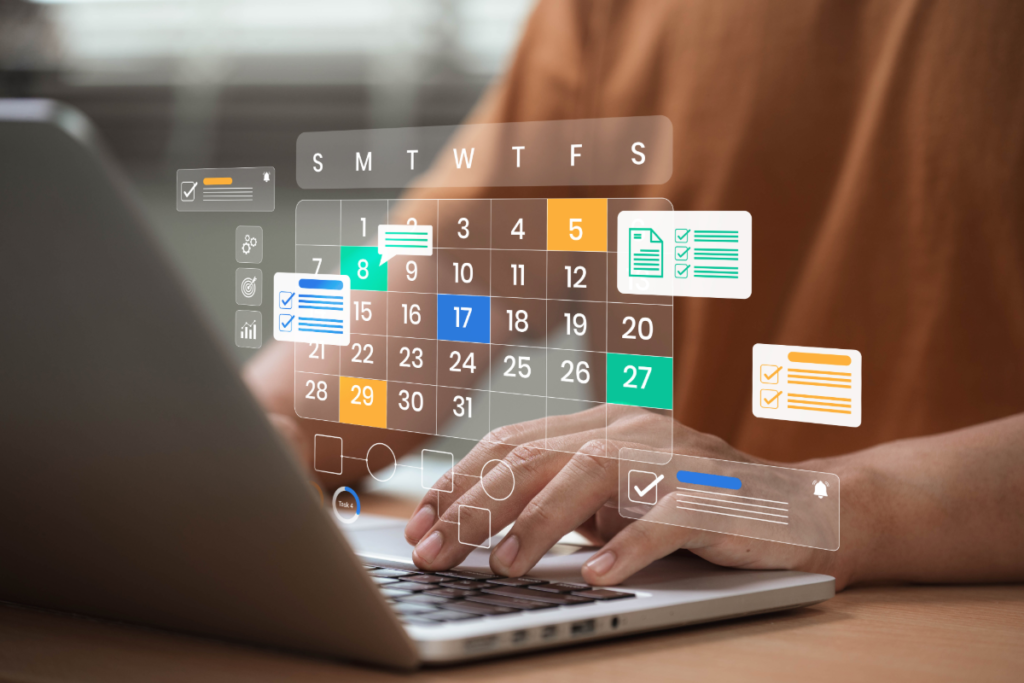
Best daily routine applications help you create this integrated view, making it impossible to ignore when your schedule skews too heavily toward work or when you’re not allocating enough time to what matters most.

Time Blocking: Your Secret Weapon

Time blocking sounds simple, but most people do it wrong. They block time for work projects but leave personal commitments floating in the “I’ll do it later” category. Then they wonder why work always wins.

The solution is treating personal priorities with the same respect as work deadlines. Schedule your workout at 6 AM like you’d schedule a board meeting. Block family dinner from 7-8 PM like it’s a client presentation. When personal activities have specific time slots in your calendar, they stop being negotiable.

Best planner for time blocking tools make this process seamless, allowing you to create protected blocks for different life areas while ensuring nothing gets overlooked.

Strategic Scheduling Based on Energy Levels

Not all hours are equal. You might crush complex analytical work at 9 AM but struggle with the same task at 4 PM. Meanwhile, your creativity peaks in the evening when logical thinking becomes harder.

Map your energy patterns and design your schedule accordingly. Place demanding work during peak mental energy times, schedule meetings during moderate energy periods, and reserve low-energy times for administrative tasks or rest. This approach means you accomplish more in less time because you’re working with your natural rhythms instead of against them.

Building Non-Negotiable Personal Boundaries

Boundaries without systems fail. Saying “I won’t work past 6 PM” means nothing if you haven’t structured your workday to make that realistic.

Start by auditing where your time actually goes for one week. Track everything—meetings, focused work, email, interruptions, personal time. With this data, you can block focused work time with notifications disabled, schedule email checking at specific intervals, and define clear start and end times for your workday.

Create a time management schedule that covers work and personal life by treating both as equally important commitments in your unified timeline.

The WhatsApp Reminder Revolution

WhatsApp Reminder Revolution

Here’s a practical tip that makes a huge difference: get reminders for calendar events through channels you actually check constantly. If you’re like most people, you check WhatsApp dozens of times daily.

When a reminder for your workout, family dinner, or personal project pops up in WhatsApp, you see it immediately. Set strategic reminders: 24 hours before important commitments so you can plan accordingly, and 10 minutes before events so you transition smoothly. This applies to both work meetings and personal commitments, treating them with equal importance.

Integrating Multiple Life Areas

Work-life balance fails when you compartmentalize too rigidly. Real life doesn’t fit into neat categories. The key is visibility and intention. When all your commitments live in one timeline, you see conflicts before they become problems and can adjust accordingly.

Modern planners support integration with external calendars—Google, Microsoft, Apple—so work calendars and personal calendars merge into one master view. No more switching between apps wondering if you’re actually free Thursday afternoon.

Time management tools and techniques to plan smarter help you manage this integration without losing track of what matters across different life areas.

Building Sustainable Habits

Grand plans for perfect balance often fail because they’re unsustainable. Start smaller. Choose one or two keystone habits that support multiple life areas. Maybe it’s a 30-minute morning routine that includes movement and planning your day.

Make these habits visible by scheduling them as recurring events in your calendar. When “morning routine” appears automatically each day at 6:30 AM, you’re not relying on willpower or memory, you’ve made it automatic.

How to make a habit tracker that actually sticks involves integrating those habits into your daily timeline rather than tracking them separately and hoping you remember.

Managing Digital Overload

Technology enables better work-life balance, but it also threatens it. Set up systems that leverage technology’s benefits while minimizing its drawbacks. Use calendar blocking to create phone-free periods, enable do-not-disturb modes during personal time, batch process emails at specific times, and use voice input to quickly capture tasks without getting sucked into your device.

The goal isn’t to disconnect from technology—it’s to make technology serve your priorities instead of controlling your attention.

Planning for Flexibility

Rigid schedules break when life happens. Build flexibility by scheduling buffer time between commitments, creating flex blocks for handling unexpected issues, and maintaining a clear priority hierarchy so you know what can shift when needed. When you have clear visibility of your entire schedule, adjusting becomes straightforward.

Vacation and Recovery Time

Work-life balance isn’t just about daily schedules—it’s about longer rhythms too. Regular recovery periods aren’t luxuries; they’re essential for sustained high performance. Schedule vacation time far in advance and treat it as non-negotiable. Block recovery days after intense work periods.

Vacation tracker for work-life balance helps ensure you’re actually using your time off rather than letting it accumulate while you burn out.

The Weekly Planning Ritual

The difference between people who maintain good work-life balance and those who constantly struggle often comes down to one habit: the weekly planning session.

Every Sunday evening or Monday morning, spend 20-30 minutes reviewing the upcoming week. Look at work deadlines and meetings, but also look at personal commitments and self-care time. Ask yourself: Does this week reflect my priorities? Have I scheduled time for what matters most?

This small investment prevents the reactive scrambling that destroys work-life balance. You start each week with intention rather than hoping everything works out.

Measuring What Matters

You can’t improve what you don’t measure. Build simple tracking into your calendar by color-coding different life areas so you can visually see your balance at a glance. Review your actual schedule weekly—not what you planned, but what you actually did. This data reveals patterns and helps you adjust your approach.

The Integration Mindset

Stop thinking about work-life balance as a zero-sum game where work’s gain is life’s loss. Rest and recovery make you more productive at work. Physical health improves mental performance. Personal relationships provide perspective that enhances professional judgment. When you view life holistically, optimizing one area often improves others.

Taking the First Step

Achieving work-life balance without sacrificing productivity isn’t about perfect execution from day one. It’s about building systems that make both possible.

Start this week. Open your calendar and look at the next seven days. Do you see work commitments alongside personal ones? Have you protected time for what matters most?

If not, start scheduling. Block your workout time. Schedule family dinners. Plan your hobby time. Add buffer periods for flexibility. Set smart reminders that actually reach you.

The beauty of the calendar-first approach is that it makes imbalance visible. When you see five days of back-to-back meetings with no personal time, you can’t ignore the problem.

True productivity isn’t about cramming more into each day. It’s about aligning your time with your priorities and building a life that sustainably supports both professional success and personal fulfillment. Design that life starting today.

Leave a Reply

Your email address will not be published. Required fields are marked *