
Time Management Tips and Tricks

30 Journal Prompts for Self-Reflection: Add to Your Fhynix Routine

In a world where your day fills up before it even begins, self-reflection is often the first thing to disappear from your routine. Yet it’s also the one habit that makes every other area of life calmer, clearer, and easier to manage. Journaling isn’t just about writing—it’s about slowing down enough to understand what you’re feeling, why you’re overwhelmed, and what you actually want out of your days.

But most people struggle with journaling for the same reasons they struggle with planning: no structure, no consistency, and no space in their schedule. You start strong for a day or two, then life gets busy again. The real challenge isn’t finding the right journal—it’s building a system that helps you show up.

That’s where adding journaling into your Fhynix routine makes a difference. When your reflections become part of your daily timeline—scheduled, visible, and supported by reminders—it transforms journaling from a random habit into a grounding ritual. The following prompts are designed to help you reconnect with yourself, even if you only have a few minutes a day.

How Fhynix Supports a Daily Journaling Habit

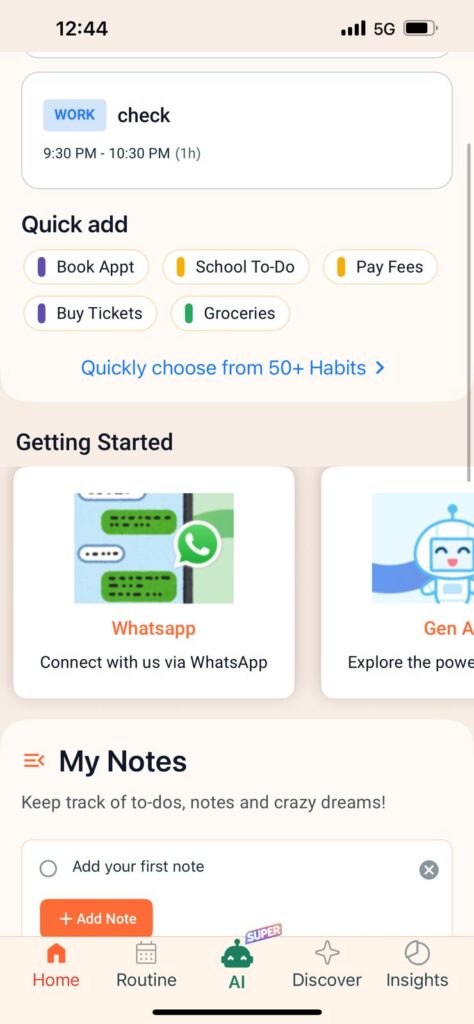
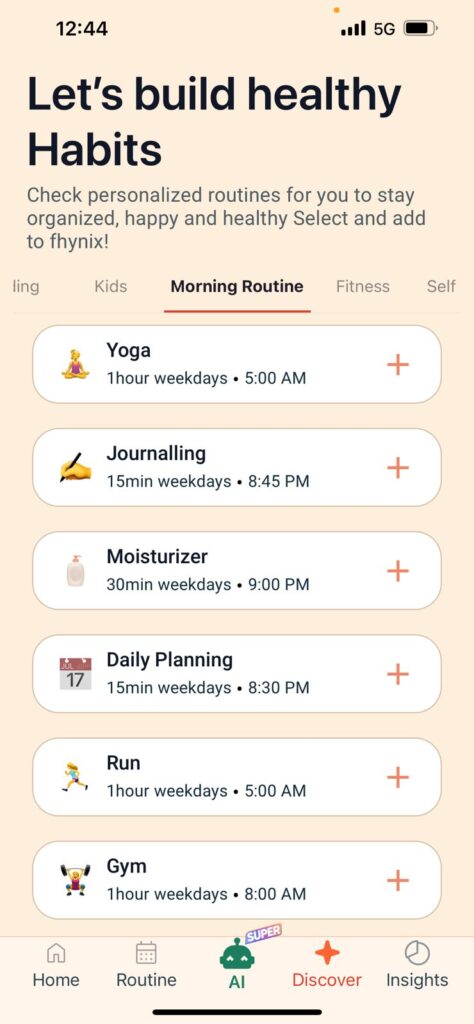
A journaling habit survives only when it fits naturally into your day. Fhynix makes this possible by turning your journal time into a recurring, scheduled ritual—just like any other life task. Rather than keeping “journal today” as a mental note you’ll eventually forget, you can create a daily or weekly journaling block directly on your calendar timeline.

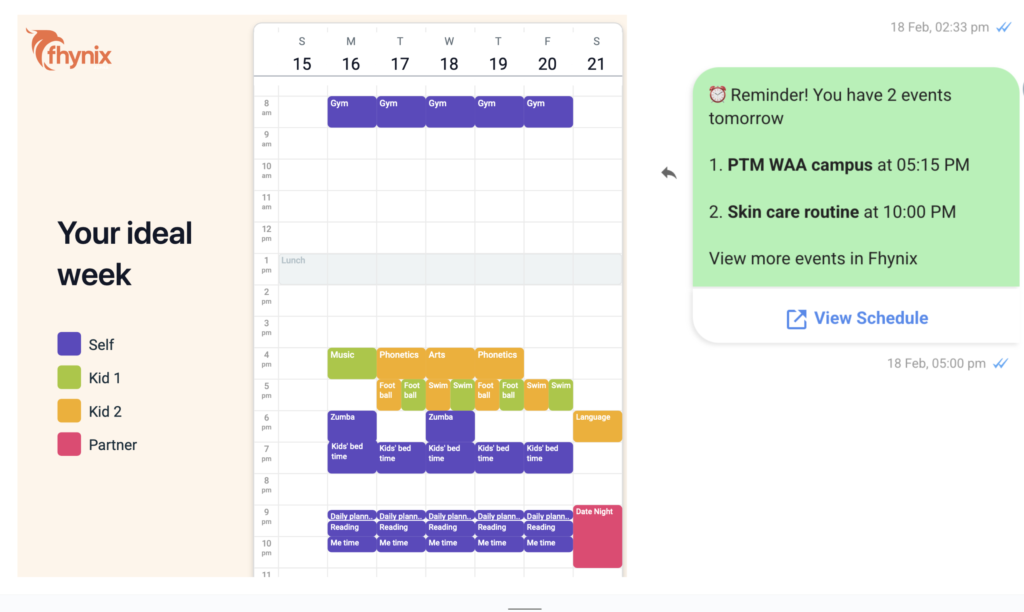
The calendar-first design helps you visualize journaling as part of your lifestyle, not an extra chore. You can slot a 5-minute reflection session after waking up, a 10-minute evening wind-down, or schedule it during your lunch break. Each journaling session can include notes directly in the calendar event, so your prompts stay accessible inside the planner—no switching apps, no clutter.

Fhynix sends reminders through WhatsApp for your journaling sessions, ensuring you don’t forget even on busy days. The visual timeline shows your journaling streak building over weeks, reinforcing the habit through visible progress. This consistency strengthens emotional awareness, personal clarity, and mental resilience. Over time, your Fhynix calendar becomes not just a planner, but a record of your growth.

30 Journal Prompts for Self-Reflection (Organized by Themes)

To make your self-reflection deeper and easier to maintain, these prompts are organized into six themes. You can follow them in order, pick intuitively each day, or rotate themes weekly for a balanced routine.

Self-Awareness Prompts (5)

  1. What is one thing I deeply value, and how present is it in my daily life?
  2. How have I changed in the last year?
  3. What drains my energy the most, and why?
  4. When do I feel most like myself?
  5. What habits shape the way I see myself?

Emotional Check-In Prompts (5)

  1. What emotion has been most frequent for me lately?
  2. What triggered it, and what did it teach me?
  3. What am I avoiding feeling, and why?
  4. What helped me feel calm recently?
  5. What does emotional safety mean to me today?

Productivity & Routine Prompts (5)

  1. What task or routine makes my day smoother when I follow it?
  2. What’s one thing I procrastinate often, and what’s beneath that procrastination?
  3. What currently feels “too much,” and how can I simplify it?
  4. What small win am I proud of this week?
  5. What does a balanced day look like for me?

Mindset & Perspective Prompts (5)

  1. What belief about myself is holding me back?
  2. What belief about myself is helping me grow?
  3. What fear do I want to challenge this month?
  4. What would I do differently if I trusted myself more?
  5. What is one thought I want to reframe?

Life Vision & Goals Prompts (5)

  1. What kind of life am I building for myself?
  2. What goal matters most to me right now?
  3. What does success look like in this season of my life?
  4. What is one dream I’m scared to say out loud?
  5. What steps can I take this month that align with my long-term goals?

Healing & Growth Prompts (5)

  1. What wound from the past still affects me today?
  2. What lesson did a difficult experience teach me?
  3. What have I forgiven myself for recently?
  4. What boundary do I need to maintain or strengthen?
  5. What would inner peace look like for me?

Each prompt encourages reflection without overwhelming you—perfect for a short daily journaling ritual that fits into your existing routine.

How to Use These Prompts in Your Daily Routine

You don’t need long, detailed entries to benefit from journaling. Even 5 minutes of honest reflection can shift your mindset and help you understand your emotional landscape. Choose one or two prompts each day—either intuitively or in sequence—and add them to your Fhynix calendar as a scheduled journaling block.

Store the prompt inside the event notes so it appears when you open your journaling session. Pair the session with your morning routine, lunch break, or use a short evening wind-down to reflect on your day. Rotating themes weekly brings balance: one week focused on mindset, another on emotions, another on long-term goals.

By anchoring journaling to a specific place in your schedule, you remove decision fatigue. With reminders and visual structure, Fhynix helps the habit stick—turning your reflections into part of your life, not a one-time effort. The color-coded calendar makes it easy to distinguish journaling time from work tasks or other commitments, creating clear boundaries for this reflective practice.

Why Journaling Works Better Inside a Daily Planner

Most people struggle with journaling because they treat it as something extra—an optional habit squeezed into leftover time. When journaling becomes part of your actual schedule, your consistency increases dramatically. This is where using a daily planner, especially a calendar-first one like Fhynix, changes the experience.

A planner gives your journaling habit structure—you see exactly when you’ll journal instead of waiting for the “right moment.” It creates mental accountability because a scheduled task is far harder to ignore than a vague intention. Your journal entries sit next to your routines, tasks, and energy patterns, helping you understand why you feel what you feel. Seeing it repeated daily on your timeline builds rhythm and reinforces the habit naturally.

By placing journaling inside your planner—not separate from your life—you turn a reflective practice into a sustainable ritual. You’re no longer trying to find time; you’re giving it space within your existing daily structure.

How to Build a Consistent Journaling Schedule with Fhynix

Creating a consistent journaling routine becomes much easier when it fits naturally within your day. Here’s how you can use Fhynix to build that rhythm effortlessly:

Step 1: Pick Your Ideal Moment

Morning clarity? Evening unwind? Afternoon reset? Choose the time with the least resistance and schedule a 5–10 minute block. Consider when you naturally have quiet moments or when you most need emotional processing.

Step 2: Add It to Your Calendar Timeline

Create a recurring event—daily or weekly, depending on what feels sustainable. Add your chosen prompt in the event notes so it’s ready when you begin. This eliminates the friction of deciding what to write about each day.

Step 3: Use Reminders to Stay Consistent

Enable WhatsApp reminders for your journaling sessions. Instead of relying on memory or willpower, let your timeline and notifications gently guide you toward this reflective practice.

Step 4: Pair It with an Existing Routine

Attach journaling to something you already do consistently: right after waking up, during your morning coffee, after studying, or as part of your evening wind-down. This habit stacking makes journaling feel natural rather than forced.

Step 5: Track Your Progress Visually

Your calendar becomes proof of consistency. Seeing your journaling sessions stack up over days and weeks reinforces motivation and shows you’re building something meaningful. The visual streak creates positive momentum that encourages continued practice.

With these small steps, journaling becomes part of your natural flow—something you look forward to rather than something you struggle to maintain.

Tips for Getting the Most Out of These 30 Journal Prompts

To make your reflections deeper and more meaningful, try incorporating these simple journaling strategies:

Write honestly, not perfectly. Your journal is a safe place. Let your thoughts be raw, messy, and real. Grammar and structure don’t matter here—clarity and authenticity do.

Choose one prompt per day. Slow reflection gives more clarity than rushing through multiple prompts. Depth matters more than quantity when building self-awareness.

Revisit prompts monthly. Different seasons of life bring different insights. What you write today may feel completely different a month later, showing how you’ve evolved.

Connect your reflection with your schedule. Noticing stress in your entries? You might be overworked. Feeling inspired? It might be time to start a new project. Let your journaling guide your planning decisions and help you adjust your timeline accordingly.

Keep entries short if needed. Two sentences can be enough to unlock emotional clarity. On busy days, even brief reflections maintain the habit and keep you connected to yourself.

These prompts aren’t meant to overwhelm you—they’re designed to help you stay aware, grounded, and emotionally aligned with what matters most in your life.

How Journaling Enhances Your Overall Fhynix Routine

Your daily planner becomes more powerful when it reflects not only what you do, but also how you feel and what you want. By adding journaling to your Fhynix routine, you bring emotional awareness into the same space where you plan tasks, routines, and commitments.

Journaling amplifies your planning system in several ways. Clarity improves your decision-making—when you understand your emotional patterns, you choose better priorities and use your time more intentionally. Reflection reduces overwhelm by helping you untangle stressful thoughts, making your schedule feel lighter and more manageable.

Your goals become more aligned because your entries show what truly matters to you, helping you plan more intentionally rather than just filling time. Your calendar gains emotional context as you start seeing how your plans and feelings influence each other, creating a more holistic view of your life.

Over weeks and months, journaling quietly transforms your daily planning rhythm. You get clearer about priorities, more intentional about time use, and more connected to yourself—one calendar block at a time. The practice helps you distinguish between urgency and importance, leading to better decisions about how you structure your days.

Making Journaling Part of Your Growth System

Journaling works best when it’s not isolated from the rest of your life. When integrated into a unified planning system like Fhynix, it becomes part of a comprehensive approach to personal growth that includes habit tracking, time management, and goal setting.

The insights from your journal entries can directly inform how you structure your days. If you notice through journaling that mornings are your most creative time, you can schedule your most important work accordingly. If emotional check-ins reveal patterns of stress around certain activities, you can adjust your timeline to include more buffer time or breaks.

This integration creates a feedback loop where reflection informs planning, and planning creates experiences worth reflecting on. Your calendar becomes not just a task manager but a tool for continuous self-improvement and emotional wellbeing.

Conclusion: Make Self-Reflection a Part of Your Everyday Life

Journaling doesn’t require an hour of silence, a beautiful notebook, or a perfect routine. It only requires intention—and a place in your day. When you add self-reflection to your actual schedule, it stops being a someday habit and becomes a grounding moment you can rely on. These 30 prompts help you understand your emotions, clarify your goals, and reconnect with the version of yourself you’re becoming.

By weaving journaling into your Fhynix routine, your reflections live inside the same space where you plan your tasks, habits, and commitments. Each session becomes a small pause that brings more calm, more clarity, and more alignment into your daily timeline. Over time, you don’t just fill your planner—you evolve through it.

Add Your First Journaling Session to Fhynix Today

Open Fhynix and create a simple 5-minute journaling block for tomorrow morning or tonight’s wind-down. Add one prompt from this list, set a WhatsApp reminder, and let your calendar guide you toward a more mindful routine. Small reflections lead to big growth—start with one prompt today.

Leave a Reply

Your email address will not be published. Required fields are marked *